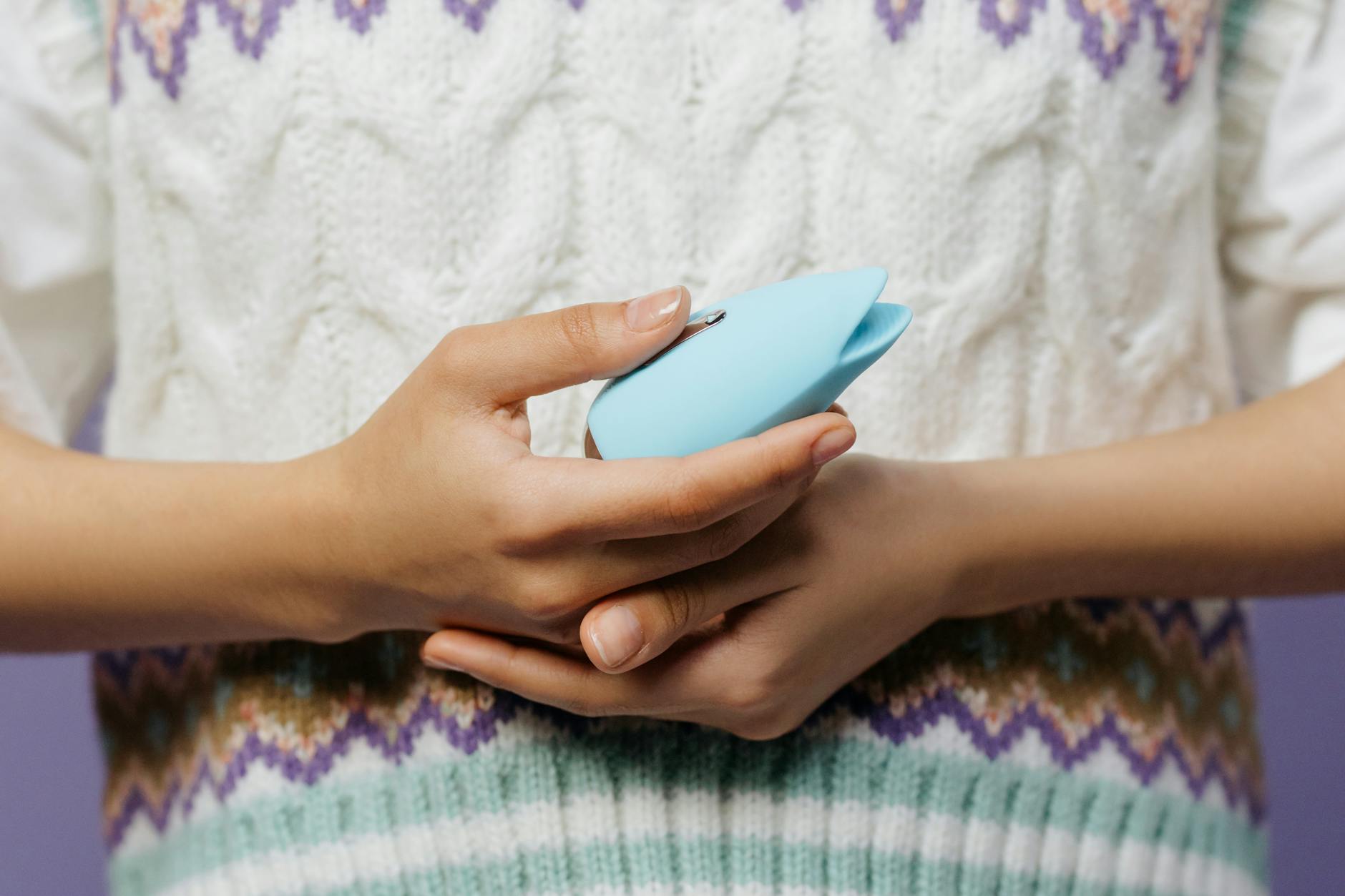
How Lemon Vibrators Help When Libido Drops After Relationship Loss
The first thing nobody tells you
Your desire didn't vanish because something's wrong with you. It vanished because your brain turned off a switch. That switch has a name: it's your mating effort allocation system, and it's been active for months or years. When the relationship ends, your body stops bothering to produce arousal because there's no one to have sex with. That's not depression talking. That's neurobiology.
Here's the part most people miss: you can teach that switch to turn back on. And lemon vibrators are one of the gentlest, most effective ways to do it.
What happens to desire after loss
Breakups, death, separation. The loss looks different, but what happens to arousal looks the same. Your brain goes into conservation mode. Cortisol spikes. Dopamine and testosterone drop. The neural pathways that light up when you think about sex go quiet. You're not horny. You're not interested. Sometimes the idea of sex feels actively repulsive, which terrifies people into thinking they've lost something permanently.
They haven't. They've just put it on pause.
The first few weeks or months, that pause makes sense. Your body is processing grief, anger, betrayal, loneliness, or all four at once. Expecting arousal during that time is like expecting to want dinner when you just found out bad news. Your system is busy.
But if months pass and desire hasn't returned, or if you're ready to feel something and your body won't cooperate, that's when most people feel stuck. They can't jump back into partnered sex (or don't want to). Solo sex feels pointless without the edge of it leading somewhere. And the longer you wait, the more your brain forgets how to turn arousal on at all.
This is where lemon sexual toys come in.
Why suction changes the equation
Lemon vibrators work differently than traditional vibrators. The suction mechanism stimulates the thousands of nerve endings in and around the clitoris without requiring friction or pressure. That matters here because after loss, your body often needs permission to feel good without guilt attached.
With a partner, sex is tied to a whole system of meaning: intimacy, vulnerability, continuation of the relationship. When that's gone, your brain might resist pleasure because pleasure feels like it belongs to that story, not to this one.
A lemon clitoral vibrator bypasses some of that mental friction. It's focused purely on sensation. It doesn't mean anything except what you decide it means. For some people, that's the difference between arousal that feels possible and arousal that feels forbidden.
The suction also tends to build pleasure more gently than traditional vibration. You're not forcing your body into a specific response pattern. You're creating conditions where arousal can emerge naturally. That matters when your nervous system is still in recovery mode.
The practical path back
If you're ready to rebuild desire, here's what I recommend to most clients:
Week 1-2: Exploration without expectation. Use a lemon vibrator for 10-15 minutes in a comfortable space. Don't aim for orgasm. Notice what sensations are available. Some people find that their body responds to gentle suction faster than they expected. Some don't feel much. Both are fine. You're gathering information, not proving anything.
Week 3-4: Longer sessions, light pressure. Increase to 20-30 minutes. Let yourself stay with sensations that feel good, even if they're subtle. Your arousal system is waking up, and it doesn't wake up all at once. This is like coaxing a hibernating animal out of its cave. You move slowly.
Week 5+: Integration and play. By this point, most people find that some form of pleasure or arousal response has returned. It might not look like it did before. It might be quieter, slower, less intense. That's normal. Your nervous system has been through something. Patience is not weakness here. It's the actual path forward.
Why the nervous system matters more than the body
After loss, your sympathetic nervous system (fight or flight) is probably overactive. Your parasympathetic nervous system (rest and digest, which is also when arousal happens) is dampened. You can't think or force arousal back. You have to slowly convince your nervous system that it's safe to relax.
Lemon vibrators help because the sensation is pleasurable without being demanding. You set the pattern. You control the speed and intensity. You can stop whenever you want. That sense of agency and safety is what your nervous system needs to start producing arousal again.
If you're working with a partner at this stage, the stakes feel even higher, which makes the nervous system more defensive. That's why solo exploration with lemon suction toys often works better during this recovery phase. There's no performance, no one to please, no one to feel hurt by your disconnection. Just you and the possibility of feeling something good.
The psychological piece
Let's be real: using a vibrator after a relationship ends can feel weird. You might feel disloyal, or sad, or like you're giving up on reconciliation. You might feel like you're proving the relationship is really over. Those feelings are normal and valid.
But here's what I tell my clients: rebuilding your own pleasure is an act of self-respect. It's saying, "I deserve to feel good even if this relationship ended. My body deserves attention and care from me, not just from someone else." That's not betrayal. That's survival. That's also the foundation for whatever comes next, whether that's a new partnership or a richer solo life.
Using a lemon clitoral vibrator is you telling yourself that you matter. It takes real courage, especially early on.
When this works faster than expected
Some people come back to arousal within a few weeks. Others need months. Your timeline isn't wrong either way. Factors that help it move faster: your age, your overall health, how long the relationship was, whether the loss was expected or shocking, and whether you're processing the loss in a supportive environment.
If you're in deep grief or depression, desire might not return until those states shift. That's not a sign that lemon vibrators won't work for you. It's a sign that you might need additional support first. Talk to a therapist or counselor. Get your doctor's input if the numbness extends beyond arousal. Using lemon sexual toys is part of the puzzle, not the entire picture.
When you're ready for more
Once desire returns, you have choices. Some people stay with solo pleasure for a long time, and that's fine. Some people feel ready to explore partnered sex again, whether with a new partner or someone they were already connected to. Some discover they want to deepen their own pleasure practice and keep the focus there. All of those are healthy.
If you do move toward partnered sex, having reconnected with your own arousal first makes that transition easier. You know what feels good to you. You know what speed and intensity works. You're not starting from scratch or from pressure. You're starting from a place of actual desire.
For many people, that changes everything about how the next chapter unfolds.
The reality check
A lemon vibrator won't heal heartbreak. It won't make you stop missing someone. It won't fast-forward you through grief. What it will do is gently remind your body that it's still capable of pleasure. That capacity is important, not because sex is the most important thing but because pleasure is a sign that you're alive and worth caring for. After loss, that signal matters.
Your arousal will return. It might look different. It might feel different. But rebuilding it at your own pace, without anyone watching or needing anything from you, is how you make that return feel like your choice instead of an obligation.
Start where you are. Use what feels right. Be patient with yourself. The pleasure is there. You're just teaching your nervous system it's safe to find it again.
People also ask
How long does it usually take for libido to come back after a breakup?
It depends on several factors: how long you were together, how the relationship ended, your overall health, and your support system. Some people feel arousal returning within weeks. Others need several months or longer. There's no timeline that's wrong. If six months have passed and you still feel completely numb, it's worth talking to a therapist or doctor, because that might point to something beyond normal grief (like depression). But variability in the 3-6 month range is totally normal.
Can lemon vibrators help if I'm still grieving the relationship?
Yes, but with an important caveat: if you're in acute grief (the first few weeks), don't pressure yourself to feel anything. Let yourself be sad. Once you're past that acute phase and your brain is slowly shifting toward "what's next," lemon clitoral vibrators can help gently signal to your nervous system that pleasure is still available. They're not a distraction from grief. They're part of the process of rebuilding self-care.
Is it normal to feel guilty using a vibrator after a breakup?
Completely normal. You're separating pleasure from the relationship framework it was tied to for a long time. That takes mental adjustment. Remind yourself that your pleasure belongs to you, not to the relationship. Using a lemon vibrator is you reclaiming something that is entirely yours. That's not disloyalty. That's healthy.
What if I try a lemon vibrator and still feel nothing?
That's actually useful information. It might mean your nervous system isn't ready yet, and that's fine. It might mean suction isn't your sensation of choice. Try shorter sessions, lower intensity, or different times of day. Some people respond better to suction in the afternoon rather than at night. Some need a longer warm-up period. And some benefit from working with a therapist first to process the relationship loss. The vibrator is a tool, not a magic fix.
Should I try a new partner before I feel desire return?
No. Jumping into new partnered sex before your own arousal system is awake tends to create disconnection and sometimes trauma. You're performing or complying rather than feeling. Spend time reconnecting with your own pleasure first. That foundation makes any future partnership feel different—more based on genuine desire, less based on filling a void.
How do I know if what I'm feeling is depression versus normal post-breakup numbness?
Post-breakup numbness is textured: you feel sad sometimes, angry sometimes, okay sometimes. You're grieving. Depression is flatter: nothing feels good, nothing feels bad, everything feels pointless. You're not just sad about the relationship ending. You're numb to most things. If that's been going on for more than a few weeks, reach out to a mental health professional. Depression responds to treatment, and that might be the first step before pleasure rebuilding makes sense.
Rebuilding desire is rebuilding yourself
When a significant relationship ends, arousal is just one casualty among many. You've lost a daily presence, a sense of belonging, maybe a vision of your future. Your libido going quiet is part of that larger loss. But it's also one of the first things that can signal your system that recovery is possible.
Using lemon vibrators during this time isn't about racing back to sex. It's about gently reminding yourself that you're a whole person whose pleasure matters. That's the real work. And it starts with permission to feel something good, at your own pace, on your own terms.
If you're ready to explore that, we're here. If you're not ready yet, that's okay too. But know that when you are, your capacity for pleasure is still there. You're just learning how to access it without the framework that used to hold it.