Let's be real about single pleasure after partnership
You spent years, maybe decades, having sex with someone else's rhythm, someone else's schedule, someone else's comfort in mind. Now you're alone. And here's the thing nobody says out loud: rediscovering what your own body actually wants is harder than you'd think.
It's not that you've forgotten how to pleasure yourself. It's that you've spent so long calibrating desire around another person that solo pleasure feels like learning a language you used to speak but somehow forgot. Lemon clitoral vibrators can help rewire that experience, but first you need to understand what's actually happening.
What changes when you go from partnered to solo
After a long relationship, your nervous system has been trained to respond to external cues. A partner's touch, their timing, their preferences. Your arousal became intertwined with theirs. Your orgasms, whether you realized it or not, were partly a relational act. Even your body's responsiveness shifted toward patterns shaped by years of shared intimacy.
Switching to solo pleasure means retraining that system. Your brain needs to remember that desire can exist without an audience. Your body needs permission to pursue sensation for its own sake, not as a duet. That's not weakness or rust. That's just neuroplasticity catching up to a new reality.
Most of my clients report one of three things in the first weeks single:
Some feel liberated. The pressure lifts. They touch themselves without the underlying performance anxiety and find sensation quickly.
Some feel numb. Years of accommodation have dimmed their own signal. They go through the motions but can't quite find the spark.
And some feel guilty. The guilt of pleasure without witness, as if solo satisfaction is somehow less legitimate. It's not. It's just different.
Why lemon vibrators change the equation
Lemon clitoral vibrators work by using suction and gentle pulsation rather than intense vibration. That distinction matters when you're rebuilding solo pleasure because suction doesn't demand a specific kind of arousal state. It works with whatever you bring to it.
A traditional vibrator asks your body to reach a certain arousal threshold quickly. If you're used to a partner's touch building that for you, jumping straight to solo vibration can feel jolting or disconnected. Suction from a lemon vibrator meets you where you are. It draws sensation out rather than imposing it.
That changes the psychological experience. You're not chasing an external standard. You're listening to your body's actual response. Over weeks of solo use, that listening gets louder. Your own arousal cues become familiar again. You remember what turns you on when there's zero external expectation.
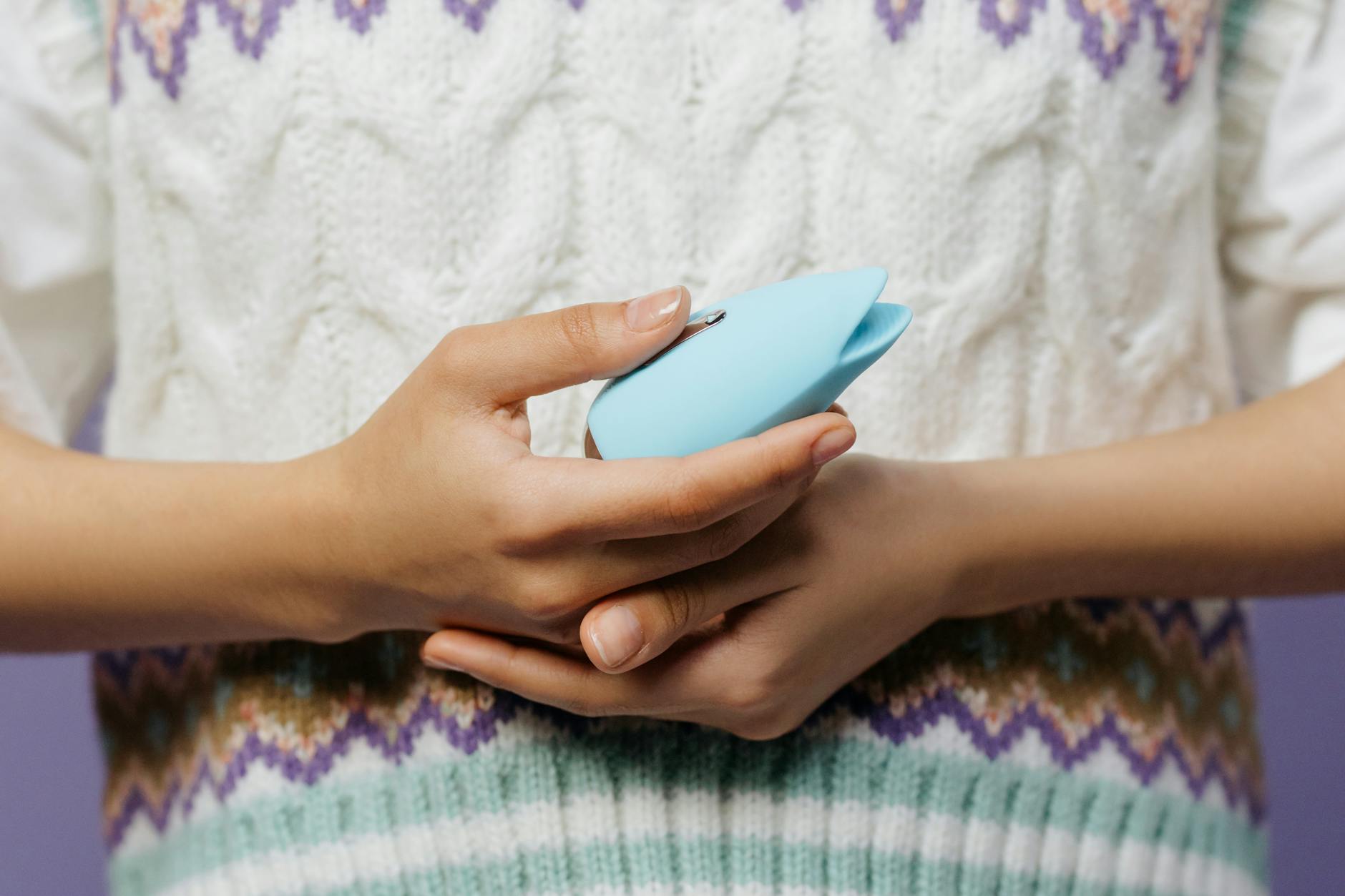
Photo by cottonbro studio on Pexels
The permission piece is bigger than you think
After a long partnership, solo pleasure can feel selfish. Even though it isn't. Even though intellectually you know your pleasure matters. The feeling lingers anyway.
I work with clients on this specific block constantly. They come back from a first solo experience with a lemon vibrator or other toy and say something like, "It felt strange being this focused on my own sensation." That strangeness is the point. You're unfamiliar with yourself as the sole audience. The sole priority.
One reframe that helps: this is how you remember what you actually like. Not what you compromised on. Not what worked for someone else. What actually lights you up. That information matters for your next relationship, for your own confidence, for your sense of agency in your own body.
Using a lemon clitoral vibrator becomes a practice in permission. Each time you use it, you're saying: my pleasure is worth time and attention. My body's response is valuable even when I'm the only one experiencing it. Those beliefs rebuild slowly, but they rebuild.
Building your solo practice
Here's what actually works, based on years of coaching people through this transition.
Start without pressure for outcome. Solo pleasure isn't about having the best orgasm. It's about noticing. Download the Lemon Vibrator Shop app or set a calendar reminder for two or three times a week when you have genuine privacy and time. Not rushed. Not a task. A commitment to yourself.
Use lumen vibrators on the lower intensity settings first. Patterns one through three on the Lem work beautifully for this because you're not fighting through intensity. You're discovering sensitivity. Let yourself be slow. Let yourself take 20 minutes to build arousal from baseline. That slowness is information. It tells you what your real timeline is when there's no external schedule.
Notice without judgment. Are you more aroused at certain times of day? Does it matter if you've eaten? How does stress in other parts of your life show up in your body? These details are gold. They're your own user manual, written by you, for you.
What happens in the brain when you practice solo pleasure
Neurologically, solo sexual response rebuilds your confidence in your own arousal system. When you rely on a partner for most of your sexual pleasure for years, your brain gradually outsources that capability. You become a responder rather than an initiator. Your dopamine reward circuits organize around external validation.
Rediscovering solo pleasure reactivates your own initiation pathways. Your brain remembers it can generate desire independently. Orgasms you give yourself hit differently neurologically than partnered sex. They reinforce agency and self-trust. Lemon sexual toys like the Lem make that easier because the suction response is so immediate and clear. You touch yourself, the sensation is unmistakable. Your body confirms: yes, I'm here, I can do this.
Over time, that confidence bleeds into other parts of your life. Your sense of what you need becomes clearer. Your boundaries sharpen. You stop asking for permission and start stating preferences.
The guilt thing, directly
If touching yourself feels selfish after a long partnership, that's worth examining. Long-term relationships sometimes train us to prioritize someone else's comfort over our own legitimacy. That's not partnership. That's accommodation.
Using a lemon vibrator or any toy solo is not indulgent. It's not a substitute for real intimacy. It's a practice in saying: I matter. My body matters. My pleasure deserves attention and technology and time.
I had a client who said after six weeks of solo practice with a clitoral vibrator, "I feel like I'm remembering who I am." That's what rebuilding solo pleasure actually is. Not replacing a partner. Remembering yourself.
When to bring this into your next relationship
Here's something I always tell people rediscovering solo pleasure: don't rush to share what you're learning. Let yourself have this for yourself first. You don't owe a future partner the details of your solo practice or your favorite techniques.
What you do owe your next relationship is a clearer sense of your own arousal. A comfort with your own pleasure. The ability to say what you want instead of defaulting to what used to work. All of that comes from rebuilding your solo practice now.
FAQ
Is it normal to feel guilty about solo pleasure after a long relationship?
Completely. After years of framing intimacy as a shared act, solo pleasure can feel transgressive. It's not. Your pleasure was always yours. You were just sharing space with it. Now you're rebuilding relationship with your own arousal on your own terms.
How long does it take to feel comfortable with solo pleasure again?
There's no standard timeline. Some people feel comfortable within weeks. Others take months. The key is consistency, not speed. Using lemon clitoral vibrators two to three times weekly tends to accelerate the process because the feedback is so clear.
Will solo pleasure affect my ability to have partnered sex later?
No. In fact, the opposite. When you know your own body well, you can guide a future partner more effectively. You're less likely to fake or accommodate. You show up with actual preferences instead of default patterns.
Should I tell a future partner I use toys for solo pleasure?
Not a requirement, but transparency tends to be healthier. If you're using lemon vibrators or other toys regularly, and you want to share that, it gives a partner insight into what you enjoy. Some partners find that sexy. Some find it useful information. Either way, it's your body and your privacy.
Does using a vibrator make solo pleasure easier than before?
It makes it different, not easier. A lemon clitoral vibrator provides clear physical feedback that can help you rebuild confidence in your own arousal. But the psychological work, the permission piece, that's on you. The toy is a tool, not a solution.
What if I can't orgasm solo after a long relationship?
That's more common than you think. Your nervous system learned to relax into pleasure with a partner present. Solo relaxation is different. Give yourself grace. Keep practicing. Consider whether stress, medication, or other life factors are relevant. If it continues to bother you, talking with a therapist trained in sexual health can help.
What rebuilding solo pleasure actually means
You're not starting over. You're remembering. You're rebuilding trust in your own body. You're learning that pleasure doesn't require witness to be valid.
Lemon clitoral vibrators help because they meet you in that process with clarity and consistency. But the real work is psychological. It's permission. It's showing up for yourself. It's practicing the belief that your pleasure matters when you're the only one in the room.
That belief, built slowly over weeks and months, changes everything. Not just your solo experience. Your confidence. Your boundaries. Your next relationship. All of it traces back to one decision: I'm worth this attention.
If you're navigating this transition and want support, reach out. Rebuilding intimacy after a major life shift is part of what I do, and there's no shame in getting help.