
How to Use a Lemon Vibrator With a Partner for Couples Pleasure
The real conversation nobody knows how to start
Let's be real. Introducing a lemon vibrator to your partner is not actually about the vibrator. It's about vulnerability, desire, and the unspoken question underneath: "Will you still want me if I need this?"
Most people don't know how to have that conversation. So they don't. They buy a toy, hide it, use it alone, and carry the small shame of the secret. Or they try to surprise their partner with one during sex and watch the whole mood collapse into confusion and hurt feelings. Neither approach works.
Here's what actually does work, based on what couples tell me in my therapy practice and what the research shows about desire and communication. Spoiler: the best sex with a partner after you've introduced a lemon clitoral vibrator is often better than the sex before.
Why bringing it up feels so hard
There are three fears under the surface, and they're worth naming before you open your mouth.
Fear one: "My partner will think I'm not satisfied with them." This is the biggest one. Our culture teaches us that good sex is penis-in-vagina sex, and anything else is a commentary on someone's inadequacy. That's nonsense. But you learned it young and it lives in your nervous system. Your partner probably learned it too.
Fear two: "They'll think I'm weird." Sex toys used to be shameful. For a lot of people, they still are. If your partner grew up in a conservative household or had bad sex education, they might see a lemon vibrator as a statement about what's wrong with the relationship, not what could be right with it.
Fear three: "They'll say no and it'll be awkward forever." This is real. Some partners do say no. Some do get weird about it. And if that happens, the silence that follows can be enormous. You're not wrong to be afraid of that.
But here's the thing. Not talking about it is worse. Resentment grows in silence. Fantasy shrinks. And eventually, you're not just frustrated about the vibrator. You're frustrated about the whole relationship, because you can't ask for what you want.
The conversation that actually works
Don't start with the vibrator. Start with desire.
Pick a time when you're not about to have sex. This is crucial. Do not bring this up in bed. Do not ambush your partner with it mid-foreplay. Find a normal moment, on the couch with tea or during a walk, and frame it as something you want to explore together, not something that's missing.
Here's what I tell people to say:
"I've been thinking about our sex life, and I want to explore more. There's this thing I'm curious about, and I wanted to bring it up with you because I care about your opinion. I've heard a lot of people talk about using lemon vibrators together, and I'm interested in trying it. Not because anything's wrong. But because I think it could feel really good for both of us, and I like the idea of us figuring it out together. What do you think?"
Notice what's in that sentence. You're claiming your own desire ("I've been thinking"). You're asking for partnership ("together"). You're pre-emptively addressing the fear ("Not because anything's wrong"). You're giving them agency ("What do you think?").
Then you stop talking and listen.
Your partner might need time. They might ask questions. They might say "I don't know" or "Maybe" or "Let me think about it." All of that is fine. The worst response is dead silence. The second-worst is immediate yes with no real enthusiasm. Both of those mean you haven't actually solved the fear underneath. You've just moved past it. That doesn't last.
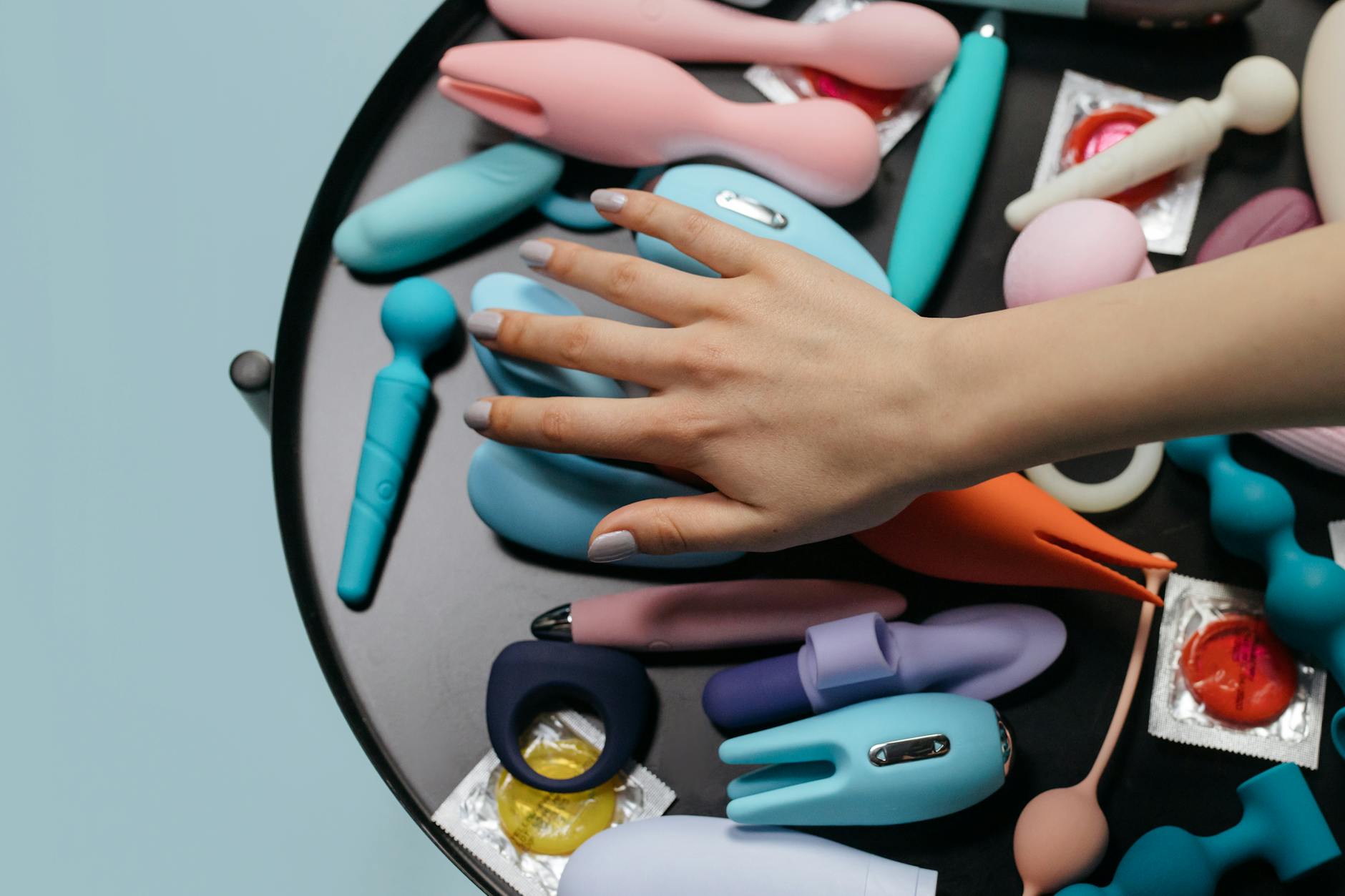
Photo by cottonbro studio on Pexels
When your partner says yes but seems uncertain
This is actually the most common scenario. They say yes. But they're not enthusiastic. They seem like they're doing it for you.
If that happens, don't push forward. Go back and say something like: "Hey, I notice you seem hesitant. That's totally fine. Can we talk about what's making you nervous?" Then listen without defending yourself. Maybe they're worried about their body. Maybe they think lemon sexual toys mean something is wrong. Maybe they're scared of feeling left out or replaced by a vibrator. All of that needs air.
A good partner will tell you. An uncertain partner needs permission to be honest.
Once you understand the real fear, you can address it. "I want to use this with you, not instead of you. It's going to be something we do together." That's different from using it alone and showing them afterward. That's partnership.
How to actually use a lemon vibrator together without it being weird
Okay so you've had the conversation, your partner is on board, and now you're standing in front of each other with a lemon clitoral vibrator and no idea what happens next.
Here's the practical part.
Start with foreplay. Don't jump straight to the vibrator. Build arousal the way you normally would. Touch, kissing, whatever works for both of you. The lemon vibrator is not a shortcut. It's an addition.
Once you're both turned on, introduce it slowly. If your partner is comfortable, let them hold it. If they're the one receiving it, you can guide their hand or control it yourself. A lemon clitoral vibrator like the one from Lemon Vibrator Shop works best on the external clitoris, so position it gently against the hood or directly on the clitoris, whichever feels better.
Start on a lower setting. Most people assume you want maximum intensity. You don't. You want to feel the sensation building, not jolted awake. Your partner should feel in control. If you're the one holding it, check in: "Does that feel good? Too much? Want me to go slower?"
The conversation doesn't stop when the vibrator comes out. It actually becomes more important. Sex with a partner is not a solo performance. It's a duet. That means talking, adjusting, noticing what works.
Many couples find that lemon vibrators actually make sex feel less lonely. You're paying attention to each other. You're solving something together. There's less of the mechanical "go through the motions" and more of the "we're in this together" feeling.
The intensity question that comes up next
A lot of partners worry that once you introduce a lemon vibrator, you won't want them anymore. That penetration will feel boring. That they'll never be enough.
Here's what research and my clinical experience both show: that's not how it works. What actually happens is couples discover that they like different kinds of stimulation for different reasons. Penetrative sex with a partner feels intimate in a way a vibrator never will. A lemon clitoral vibrator feels intense and focused in a way fingers often can't match. They're not in competition. They're different tools for different jobs.
You'll also probably find that your partner enjoys watching or controlling the vibrator. A lot of partners discover that they like having a way to give you intense, focused pleasure. It shifts something. Suddenly they're not worried about performing. They're focused on your experience. And that changes how they show up.
What to do if it doesn't feel amazing the first time
This is important because a lot of couples try a lemon vibrator once, it's awkward or uncomfortable or just not that hot, and they never try again.
One session is not enough data. Your body, your partner's body, your comfort level with the vibrator, the angle, the timing, all of that needs to settle. Most couples need 3 to 5 times to figure out what actually works for them.
Be patient. Use lower settings first. Don't force intensity. Lemon clitoral vibrators are powerful, and that's the point, but you don't want to numb yourself or create pain. The suction technology works best when you've built up arousal gradually.
If something hurts, stop. If something feels wrong, say so. Your partner needs to know that you trust them enough to be honest. And you need to know that they care enough to listen.
After the vibrator is part of your sex life
Once you've integrated a lemon vibrator into partnered sex, a few things usually shift.
You'll probably talk more openly about what you like. That conversation is easier after you've literally shown your partner what gets you off. You'll feel less shame about your own pleasure. And your partner will feel less pressure to be the sole source of your satisfaction. That's not weakness. That's actually what healthy sexuality looks like.
You might also find that how to introduce a lemon vibrator to your long-term partner evolves. What feels good changes. Your body changes. Your relationship changes. The vibrator is not the destination. It's just a tool that lets you explore together.
And honestly, that's when the best sex happens. Not when someone is trying to prove something or perform perfectly. But when both people are curious, patient, and genuinely focused on what feels good.
Common questions couples ask
Can using a lemon vibrator make my partner feel inadequate?
Only if you make it about him feeling inadequate. If you frame it as "you're not enough" then yes, he'll feel that way. If you frame it as "I want to explore this with you" then it's different. Your language and tone matter enormously here. A lemon clitoral vibrator is not a referendum on your partner's sexual skills. It's an expansion of what you do together.
What if my partner wants to use it on me but I'm not comfortable with that?
Then tell them. You can say "I love that you want to try this, but I'm not ready yet" or "I'd rather use it when I'm alone for now." You get to set boundaries around your own body. A good partner will respect that. Using lemon sexual toys is not an obligation. It's a choice you both make together.
How often should we use a lemon vibrator together?
There's no rule. Some couples use it every time they have sex. Some couples use it occasionally. What matters is that it feels good for both of you and neither of you feels obligated. If it starts feeling like a chore or a performance, dial it back. Go back to what feels natural.
What if my partner wants to use a vibrator during sex and I'm worried it means they're not attracted to me anymore?
That thought is worth examining. Attraction is not just about arousal. Your partner might want to use a lemon vibrator because they want to feel you come harder. Because they like watching. Because it feels intimate. Because exploring pleasure together deepens the bond. None of that has anything to do with being less attracted to you. Talk about what you're actually afraid of. Usually it's not about the vibrator at all.
How do I clean a lemon vibrator after using it with my partner?
Use warm water and a gentle toy cleaner or mild soap. Lemon Vibrator Shop makes toys out of medical-grade silicone, which is easy to clean and won't harbor bacteria. Dry it completely before storing it. Keep it somewhere safe and accessible so it's not hidden or shameful.
Should we tell our friends or family that we use lemon vibrators together?
No. Your sex life is yours. You don't need permission or approval from anyone else. That said, you might find that talking to close friends or a therapist helps you feel less alone. A lot of couples are exploring pleasure together. You're not weird for wanting to.
The real point of all this
Using a lemon vibrator with your partner is not about the vibrator. It's about building a relationship where you can ask for what you want without shame. Where your partner wants to give you pleasure. Where you both believe that your pleasure matters.
That takes practice. That takes conversation. That takes patience and vulnerability. But that's also where the best sex lives come from. Not from performance or technique, but from genuine curiosity about each other and real commitment to each other's pleasure.
Start the conversation. Have it badly if you have to. Most important conversations are awkward at first. But have it. Your sex life will change. Your relationship will deepen. And you'll both feel less alone.