Let's talk about what perimenopause actually does to sensation.
Perimenopause is not menopause. It's the 4-10 year stretch where your hormones are doing a slow, chaotic dance toward shutdown. Estrogen bounces up and down. Progesterone swings wildly. And your nervous system is getting mixed signals about what's happening in your body. That's different from the steady drop of full menopause, and it means your sensation can feel unpredictable.
Here's the thing nobody tells you: the fluctuation is often harder than the final landing. One week you feel normal. Three days later, touch that used to feel amazing feels somehow muted. Your clitoris might feel less responsive. Arousal might take longer to build. Or it might arrive suddenly and then vanish halfway through. The inconsistency is the maddening part.
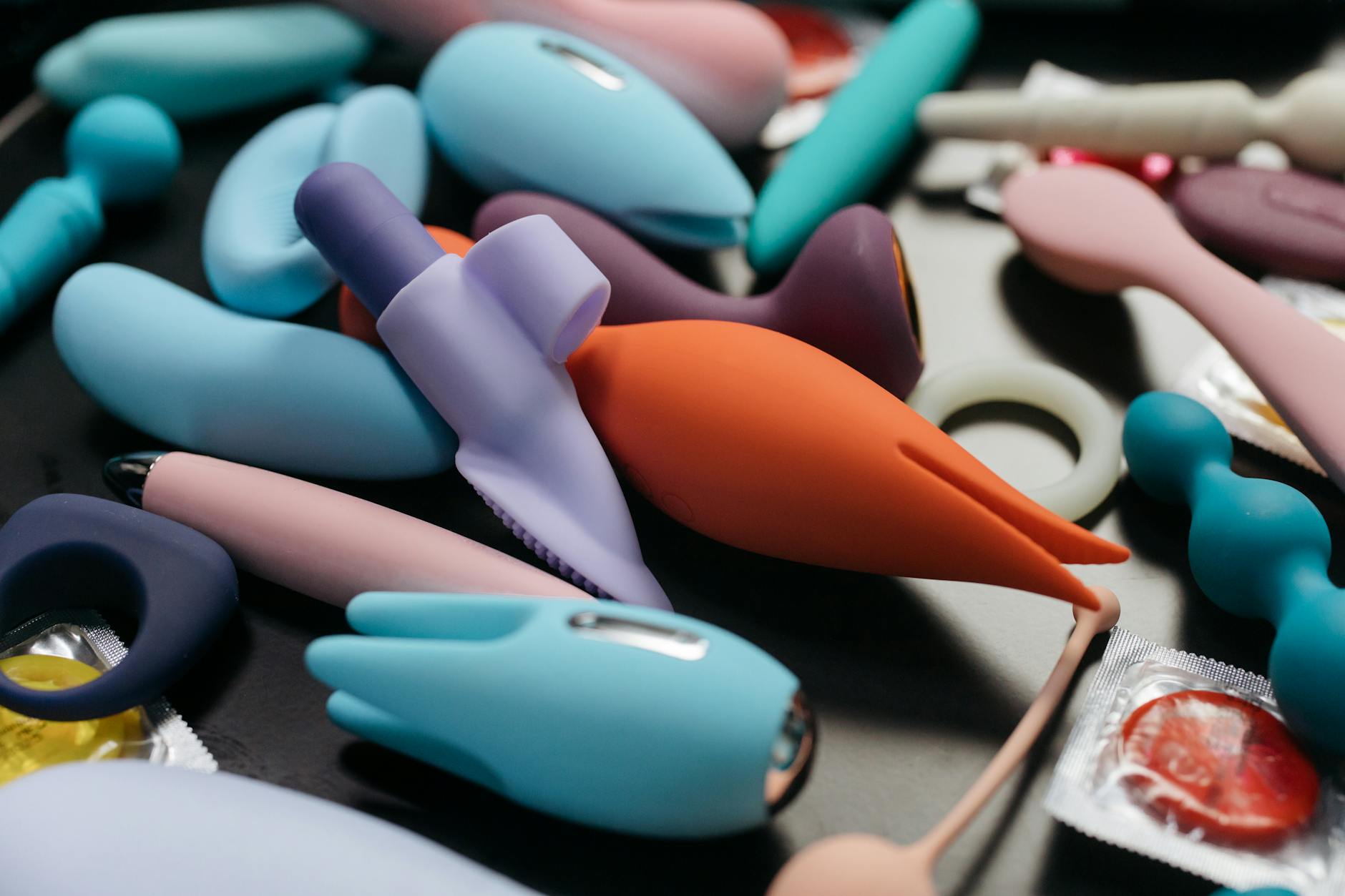
Lemon vibrators, particularly clitoral suckers like those in our lemon sexual toys collection, are built for exactly this phase.
How hormonal shifts change sensation during perimenopause
When estrogen dips, a few things happen at the tissue level. The clitoris gets slightly less blood flow, which means arousal takes longer to build. The vulva might feel a bit less engorged. Lubrication can become less reliable. But here's what doesn't change: the neural pathways for pleasure are still completely intact. Your brain still knows how to feel good. Your nerves still fire. You're not broken. You're just operating in a different gear.
The other piece is psychological. Perimenopause often arrives with hot flashes, sleep disruption, mood shifts, and that background anxiety of not knowing what your body will do next. That cognitive load tanks arousal faster than any hormonal drop. You're not in the mood because you're exhausted and preoccupied, not because you've lost capacity for pleasure.
Lemon clitoral vibrators work differently than traditional vibrators. Instead of relying on consistent friction, lemon suction toys use gentle air-pulse stimulation. That's an advantage here because it doesn't require the same degree of engorgement to feel intense. You don't need your tissue to be maximally engorged for a lemon vibrator to deliver sensation. That means you can feel good even on the weeks when everything feels a bit muted.
Why suction sensation works better during hormonal flux
Traditional vibrators stimulate through direct vibration. They work great when everything is fully aroused. But during perimenopause, when tissue is sometimes swollen and sometimes not, that same intensity can feel inconsistent. One day it's perfect. The next day it's too much or not enough.
Lemon vibrators use a different mechanism. The gentle suction and release pattern stimulates the entire clitoral network, not just the surface. Because the sensation is generated differently, it often feels more consistent across hormonal fluctuations. You're not waiting for your body to engorge to a specific threshold before the device works. The sensation is already there.
This is also why many people find that lemon sexual toys feel good for longer sessions during perimenopause. The pattern-based stimulation is less likely to cause the desensitization you might experience with continuous high-frequency vibration. You can enjoy it for 20 or 30 minutes without feeling numb afterward.
The practical settings that work during hormone fluctuations
Lemon clitoral vibrators usually come with multiple patterns and intensity levels. During perimenopause, I recommend starting lower and slower than you might have before.
Pattern 1 or 2 is your friend here. These gentler, slower patterns often feel more intense during this phase because they're activating different nerve clusters. They also give your nervous system time to register sensation and build arousal. You're not trying to force intensity. You're letting sensation accumulate.
Intensity-wise, many people find they need less power during perimenopause than they expect. This surprises them because they assume hormonal changes mean they need more stimulation. It's usually the opposite. Because traditional vibrators require high intensity to feel good when tissue is less engorged, people end up desensitized. Lemon vibrators change that equation. You can use lower settings and get deeper sensation.
One more thing: the angle matters more now. During perimenopause, experiment with slightly different angles. Directly on top sometimes feels great. Slightly to one side might feel better on a different day. You're not trying to find the one perfect angle. You're developing a range because your body isn't operating from the same baseline week to week.
Building arousal back when it feels hard to start
Perimenopause sometimes comes with a real decrease in spontaneous arousal. You have to think about sex and actively create the conditions for it to happen, rather than it just arriving. That's frustrating, but it's also navigable.
Give yourself permission to take longer. Budget 20 to 25 minutes instead of 10. Start with lemon vibrators at the lowest setting and slowest pattern. Let that run for several minutes before you adjust anything. Your nervous system needs time to switch gears from whatever you were doing (work, thinking about dinner, scrolling) into pleasure mode.
Many people find that if they start too intense or too fast, nothing happens. Their body doesn't catch up. But if they commit to a longer, slower start, arousal does build. It takes a different pathway than it used to, but it gets there.
Consider also whether you need mental foreplay. Some people find that a few minutes of reading something hot, or thinking about a partner, or a specific fantasy, helps signal to the body that pleasure is coming. That's not a sign you're broken. It's just how perimenopause works for a lot of people. Your brain and body are more connected during this phase.
What to do on the weeks when sensation feels completely gone
There will be weeks where nothing works. You use a lemon vibrator and feel nothing. It's infuriating.
First: you're not broken, and it will pass. Perimenopause is characterized by these erratic fluctuations. An off week doesn't mean you've lost the ability to orgasm permanently.
Second: skip it that day. You don't have to force pleasure. The pressure to feel something actually makes it harder. Come back to it in a few days.
Third: on those off weeks, if you want to use a lemon clitoral vibrator anyway, lower your expectations. Use it for 10 minutes instead of 30. Try a different pattern. Maybe focus on the sensation without aiming for orgasm. Sometimes taking the goal away makes it easier for sensation to show up.
This is one reason many people appreciate lemon vibrators during perimenopause specifically. Because they work through a different mechanism than traditional vibrators, you have more variability in how you use them. You're not locked into one approach.
Lubrication, comfort, and setting yourself up for success
Lubrication matters more during perimenopause than it might have before. Not because you're broken, but because the surface of the vulva changes slightly. Even if you're producing lubrication naturally, adding a bit externally often makes sensation more consistent.
Water-based lube works best with lemon sexual toys because it won't degrade silicone. A generous amount helps the device glide smoothly and makes the suction feel less like suction and more like steady, pleasurable sensation.
Also consider your environment. During perimenopause, you might be more sensitive to temperature, distraction, and pressure. If you're dealing with hot flashes, cooler room temperature helps. If you have kids or a partner around, privacy and lack of interruption matter more than they might have before. You're already working harder to build arousal. You don't need to also manage external stress.
The mental space is half the battle during this phase. Lemon vibrators are a tool. But the most important part is giving yourself permission to explore sensation differently than you used to.
The relationship piece, if you have a partner
If you're in a relationship, this is a good moment to have a conversation that's not about sex. Something like: "My body is changing. I'm figuring out what feels good now. I'd like your patience while I explore that." That's not a rejection. It's an invitation to figure out this phase together.
Many couples find that perimenopause actually deepens their sex life because it forces them to slow down and pay attention. You can't rely on the automatic chemistry. You have to be intentional. That's the hard part, but it's also the part that sometimes leads to the best sex.
If you're single and exploring, lemon clitoral vibrators give you a way to stay connected to your own pleasure even when your body is being weird. That matters. Your pleasure is worth the extra time and attention right now.
When to check in with a doctor
If sensation completely disappears for months, or if you're having pain during sex that wasn't there before, it's worth mentioning to your OB or GP. Genitourinary syndrome of menopause (GSM) can start during perimenopause, and there are treatments that help.
Also mention it if your mood has shifted significantly or if you're sleeping terribly. Sometimes the sensation changes are actually about mood or exhaustion, not about your clitoris. A doctor can help you figure out what's actually going on.
But if you're just experiencing the normal fluctuations of perimenopause, lemon vibrators and a bit of patience usually get you through.
Frequently Asked Questions
Can I use lemon vibrators if my clitoris feels numb during perimenopause?
Yes. In fact, lemon clitoral vibrators are often easier to feel when sensation is muted because the suction mechanism activates different nerve pathways than traditional vibration. Start at the lowest setting and give it time to work. Numbness during perimenopause is usually temporary and fluctuates.
How long should I expect to wait for orgasm when using a lemon vibrator during perimenopause?
There's no standard timeline. Some people orgasm in 5 minutes. Others need 25 or 30 minutes, especially if they're working through the hormonal fog of perimenopause. The key is to stop watching the clock. Budget time and let your body set the pace. Rushing usually makes it harder.
Will my sensation come back after perimenopause ends?
Yes. Once you move into full menopause and your hormones stabilize at a lower level, many people find sensation becomes more consistent again. It might be different than it was before, but it stabilizes. Perimenopause is the turbulent part. It does pass.
Should I use lemon vibrators during my period if I'm in perimenopause?
Absolutely. Some people find sensation is actually heightened around menstruation, even during perimenopause, because of other hormonal fluctuations. You might also find that the patterns that don't work other weeks feel great during your period. Experiment and notice what works for your unique cycle.
Is it normal to feel like I'm broken if lemon vibrators don't work some weeks?
Completely normal. That's perimenopause. Your body is not cooperating consistently, and that's maddening. But it's temporary. The weeks where nothing works pass. You're not losing capacity for pleasure. Your body is just reorganizing. That's a different problem than being broken, and it's solvable.
Can using lemon vibrators help me figure out what's changing in my body during perimenopause?
Yes, actually. If you pay attention to what patterns feel good when, you start to notice the rhythm of your hormonal fluctuations. You might notice that certain patterns feel better in the first half of your cycle, and different patterns feel better in the second half. That awareness helps you work with your body instead of fighting it.
The bottom line
Perimenopause changes how sensation works. That doesn't mean it disappears. Lemon clitoral vibrators, with their gentle suction mechanism, are particularly well-suited to this phase because they deliver sensation differently than traditional vibrators. They work when tissue is less engorged. They feel consistent across hormonal fluctuations. And they give you flexibility in how you explore pleasure while your body is in transition.
Your pleasure matters during this phase. It might require more intention, more time, and a willingness to explore sensation differently than you used to. But it's absolutely worth doing. On the other side of perimenopause, you'll be glad you kept that door open.