
Let's name the thing everyone avoids talking about
SSRIs work. They genuinely do reduce anxiety and depression. But they also flatten sensation, delay orgasm sometimes indefinitely, and kill desire in a way that feels less like a side effect and more like a trade off nobody explained when you filled that first prescription.
Here's the honest part: this is not your imagination. The medication is actually changing how your nervous system responds to touch, how quickly your body builds arousal, and whether orgasm feels possible at all. And yes, lemon clitoral vibrators can help. But first, you need to understand what's actually happening.
How SSRIs change clitoral sensation
SSRI stands for selective serotonin reuptake inhibitor. The drug keeps serotonin hanging around in your brain longer, which steadies mood. But serotonin is also involved in sexual response. It's part of the chain reaction that tells your nervous system "pay attention to this touch, this is good, build on this." When serotonin stays elevated, that signal gets muted.
The result: your clitoris receives the same stimulation it always did, but your brain doesn't register it the same way. It feels duller, further away, harder to wake up. Some people describe it like touching their own arm instead of an erogenous zone.
Orgasm delay happens through a similar mechanism. SSRIs also reduce dopamine's availability in some pathways. Dopamine is basically your brain's pleasure confirmation button. Without it firing, the buildup toward orgasm just sort of stops. You can feel the physical tension, but the escalation that usually leads somewhere just flatlines.
Desire dropping is partly neurochemical (serotonin and dopamine both affect motivation) and partly mechanical (if orgasm feels unlikely, your brain stops pushing for arousal). Anxiety disappears. So does wanting sex.
This is temporary, but not automatic
Your body won't spontaneously "adjust" to the medication and regain sensation on its own. That's the myth I hear most often. Three months in, people assume they're just broken now, or that this is the price of feeling stable.
The actual timeline: some people regain sensation in a few weeks. Others need months. For maybe 15 percent of people, sensation never fully returns at the original dose. The good news is that you have options that don't require stopping the medication.
Why lemon clitoral vibrators work better than your fingers right now
Your hands can't provide the kind of stimulation your nervous system needs when sensation is muted. Lemon vibrators and similar clitoral sucking devices work through a different mechanism than vibration alone.
Instead of direct vibration, they create rhythmic suction and release. This stimulates nerves through a gentler, broader pattern than traditional vibration. The sensation is less sharp, more diffuse, which means it penetrates numbness better. You're not fighting to feel intense stimulation. You're giving your nervous system a clearer signal to recognize.
The Lemon Clitoral Vibrator in particular has a sealed cup that creates consistent suction. You start at the lowest setting, which feels less overwhelming than standard vibrators when sensation is already flattened. You can increase intensity gradually as your nervous system wakes back up. This gradual approach matters because it's not about forcing orgasm. It's about reminding your body that pleasure is possible.
The protocol that actually works
Five steps to rebuilding sensation:
Step one: timing. Use your lemon vibrator at the same time each day for two weeks, even if nothing happens. Your nervous system responds to routine. Morning usually works better because cortisol is naturally higher, which pairs well with arousal. Afternoon works if mornings don't fit your life.
Step two: lowest setting only. Start at setting one or two. I know this feels pointless. That's the point. You're not trying to orgasm yet. You're trying to teach your nervous system to recognize sensation again. Thirty seconds to two minutes is enough. Stop before you feel frustrated.
Step three: external only. Keep the lemon vibrator on the vulva, not inserted. The external nerve endings are still sensitive even when sensation feels flat. This is where you rebuild the signal.
Step four: breathwork. Breathe in for four counts, hold for four, exhale for four. This sounds silly until you try it. Breathing patterns directly affect arousal. Most people hold their breath or breathe shallowly when sensation feels numb. Deliberate breathing keeps your nervous system engaged.
Step five: no pressure around outcome. The moment you start demanding an orgasm, your nervous system shuts down harder. You're retraining a system that feels broken. That requires gentleness.
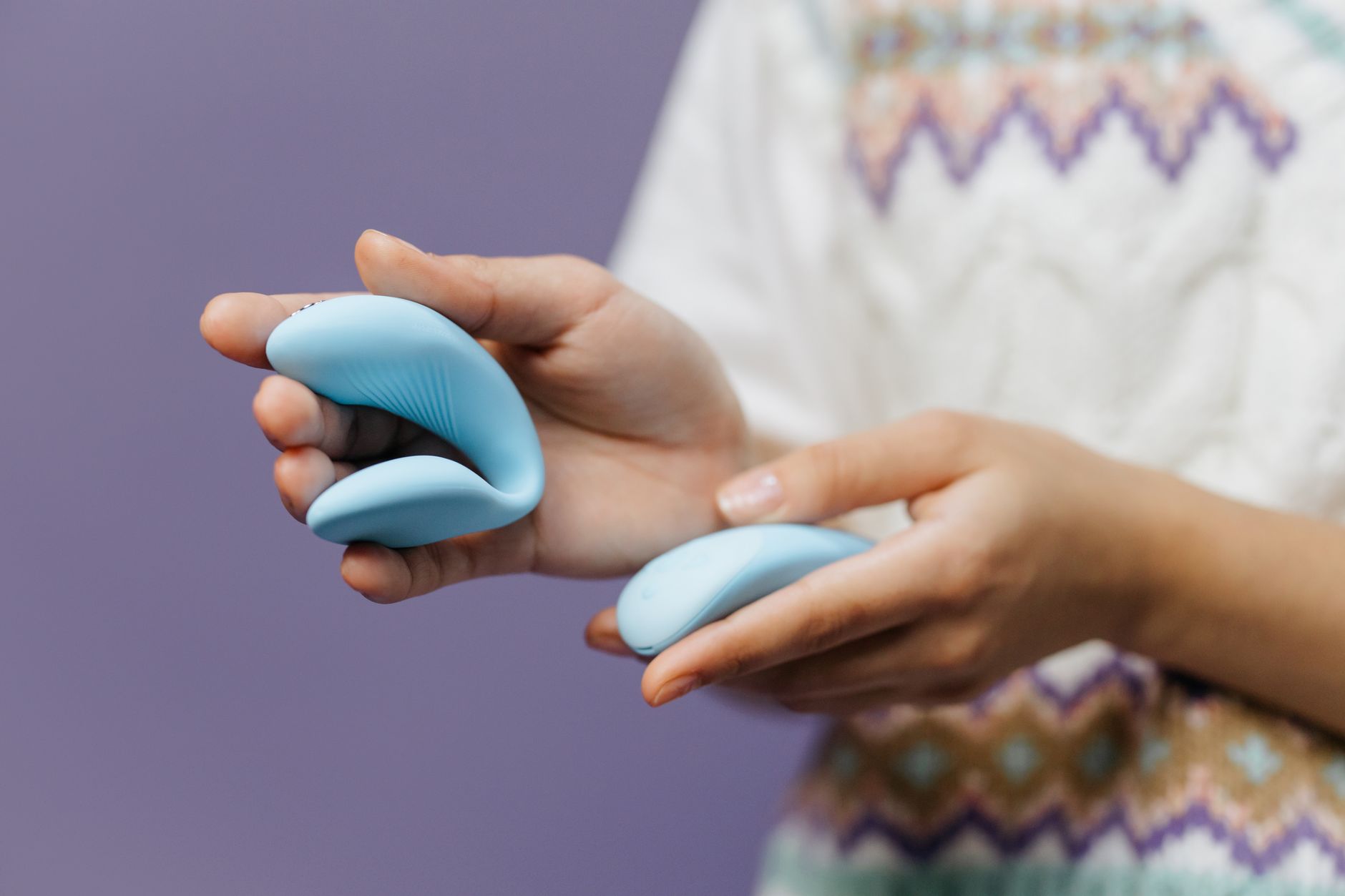
Photo by cottonbro studio on Pexels
The "Should I tell my partner" question
If you're partnered, you need to have a separate conversation from the one about the lemon vibrator. The medication conversation goes like this: "My nervous system is processing sensation differently right now because of the SSRI. This doesn't mean I'm not interested in you. It means my body needs different kinds of stimulation while it adjusts."
The vibrator conversation is practical: "I'm using this tool to rebuild sensation. It's not about you or my attraction to you. It's literally a nervous system retraining exercise."
Keep them separate. Partners often take changes in desire or sensation as rejection. They're not. Frame it as what it actually is: a medication side effect you're actively managing.
When sensation starts returning
After two to four weeks, you might notice the numbness lifting slightly. At that point, you increase settings gradually. Move to setting three or four. You might also start exploring different patterns if your lemon vibrator has them. Extended sessions become possible too. What started as 30 seconds might become five minutes without frustration.
Orgasm might still feel distant. That's normal. The return of sensation happens before the return of orgasm. Give yourself another two to four weeks. You're literally retraining neural pathways.
If by week eight you feel no change at all, talk to your prescriber. Sometimes a small dose adjustment helps. Sometimes switching to a different SSRI works better for sexual function. Sometimes adding a medication like bupropion helps counteract the sexual side effects. None of these conversations are unusual for psychiatrists. They hear them constantly.
The thing nobody tells you about SSRI sexuality
Your desire and orgasm might not return exactly the way they were. You might find that you actually prefer slower, longer sessions now. Some people discover that the lower baseline of arousal helps them be more present during sex because there's less frantic urgency. Others find they need a lemon vibrator during partnered sex and that's fine.
You're not broken. Your nervous system is genuinely altered by medication. That's not a failure of the drug or your body. It's biology. And it's manageable.
The stability the SSRI gives you is worth rebuilding sensation around. That's not a moral calculation I'm making for you. That's what the people I've worked with tell me. The trade off was worth it, but only when they stopped treating the sexual side effects as something to live with and started treating them as something to actively address.
Lemon clitoral vibrators are one tool for that active work. Combined with time, breathing, routine, and sometimes a conversation with your prescriber, they can help you find pleasure again even while you're on medication that's saving your life.
People also ask
How long does it take for SSRI sexual side effects to go away?
It varies wildly. Some people regain sensation within two to four weeks. Others need three months. A small percentage never fully regain their baseline at the original dose. If you're at eight weeks with no change, that's when you talk to your prescriber about adjustments. Don't wait longer hoping it fixes itself.
Can I stop taking my SSRI to get my sexuality back?
Don't. Stopping SSRIs can trigger withdrawal symptoms and the depression or anxiety can return. If sexual side effects are severe enough that you're considering stopping, that's the conversation to have with your psychiatrist or prescriber. There are real solutions that don't involve stopping the medication.
Do lemon vibrators work better than other vibrators for this?
Not universally, but many people find them more effective when sensation is muted. The suction mechanism creates a different kind of stimulation than vibration alone. It can penetrate numbness more effectively. That said, if you already own a vibrator, try that first. Every nervous system is different. You might discover that increasing the intensity settings on what you have works fine for you.
Will using a lemon vibrator while on SSRIs damage my sensitivity further?
No. There's no evidence that vibrator use decreases sensitivity. In fact, regular stimulation can help retrain your nervous system to recognize sensation. The opposite concern is worth naming though: using a vibrator so intense that it overrides the numbness can train your nervous system to need that intensity specifically. That's why starting low and building gradually matters.
Should I tell my doctor I'm using a vibrator?
Your doctor has heard this before. A simple conversation like "I'm using a lemon vibrator to help retrain sensation while my nervous system adjusts to the medication" is completely normal. Some prescribers will suggest it themselves. Most will appreciate that you're being proactive instead of waiting for sensation to magically return.
Can I use a lemon vibrator during partnered sex while on SSRIs?
Absolutely. Many people do. Some find they need it to orgasm. Some use it for foreplay and then transition to partnered sex. Some use it during partnered sex for direct stimulation. None of these are failures. They're adaptations. If a partner seems threatened by this, that's a separate conversation worth having about insecurity and trust.
Moving forward
SSRIs are powerful, life-changing medications. They also genuinely affect sexual function. That's not something to accept quietly. It's something to actively manage with the right tools, the right timing, and the right expectations. Lemon clitoral vibrators are one part of that toolkit. Patience with your nervous system is another. And a conversation with your prescriber about adjustments is always on the table if progress stalls.
Your pleasure matters. Your mental health also matters. You don't have to choose between them.