
Let's talk about the elephant in the room
Your partner sees you reach for a lemon clitoral vibrator and their face shifts. Maybe they go quiet. Maybe they ask if something's wrong with them, or worse, if something's wrong with you. Maybe they've straight-up said they feel replaced, inadequate, or rejected. And now you're stuck between your own pleasure and keeping the peace.
Here's the truth that changes everything: your partner's discomfort isn't about the vibrator. It's about a story they're telling themselves about what the vibrator means. And that story is almost certainly wrong.
What your partner is actually thinking (and why)
I've heard this from hundreds of partners in my practice, and the script is almost identical. "If you need a toy, that means I'm not satisfying you." Or: "Real pleasure comes from connection with me, not from a machine." Or the killer: "You never needed this before."
These aren't questions. They're statements disguised as insecurity, which means your reassurance alone won't fix them. You can say "You're enough" until you're hoarse, but your partner won't actually hear you until they understand how a lemon vibrator works physiologically.
There's a neurological difference between clitoral suction stimulation and manual touch. A lemon clitoral vibrator like the Lem doesn't replace your partner's hands or mouth or penis. It's a different neurological pathway, the same way a massage gun feels nothing like a human massage. Your nervous system lights up differently. That's not a rejection of your partner. That's the architecture of your body.
The conversation you actually need to have
Don't start with the vibrator. Start with desire.
Pick a non-sexual moment. Bed is the worst place for this conversation because you're both already stressed and your body language is loaded with context. Sit on the couch, go for a walk, drink coffee. Keep it simple: "I want to talk about something that's been sitting with me, and I need you to hear me without jumping to conclusions."
Then say this, roughly: "I love sex with you. I also know that I don't always come during sex, or that sometimes it takes me a really long time. That's not because you're not good enough. That's my nervous system. I'm interested in exploring my own pleasure separately from that, not instead of that."
Wait. Let them respond. Most partners will immediately try to "fix" this by volunteering to do more foreplay or to go slower. That's their nervous system trying to reabsorb the threat. Gently redirect: "I appreciate that. And what I'm asking for is different. I want to use a lemon vibrator during sex with you, or sometimes on my own. Not because you're failing. Because I want to know what my body is actually capable of."
Then say: "Your pleasure isn't going anywhere. This just adds to it."
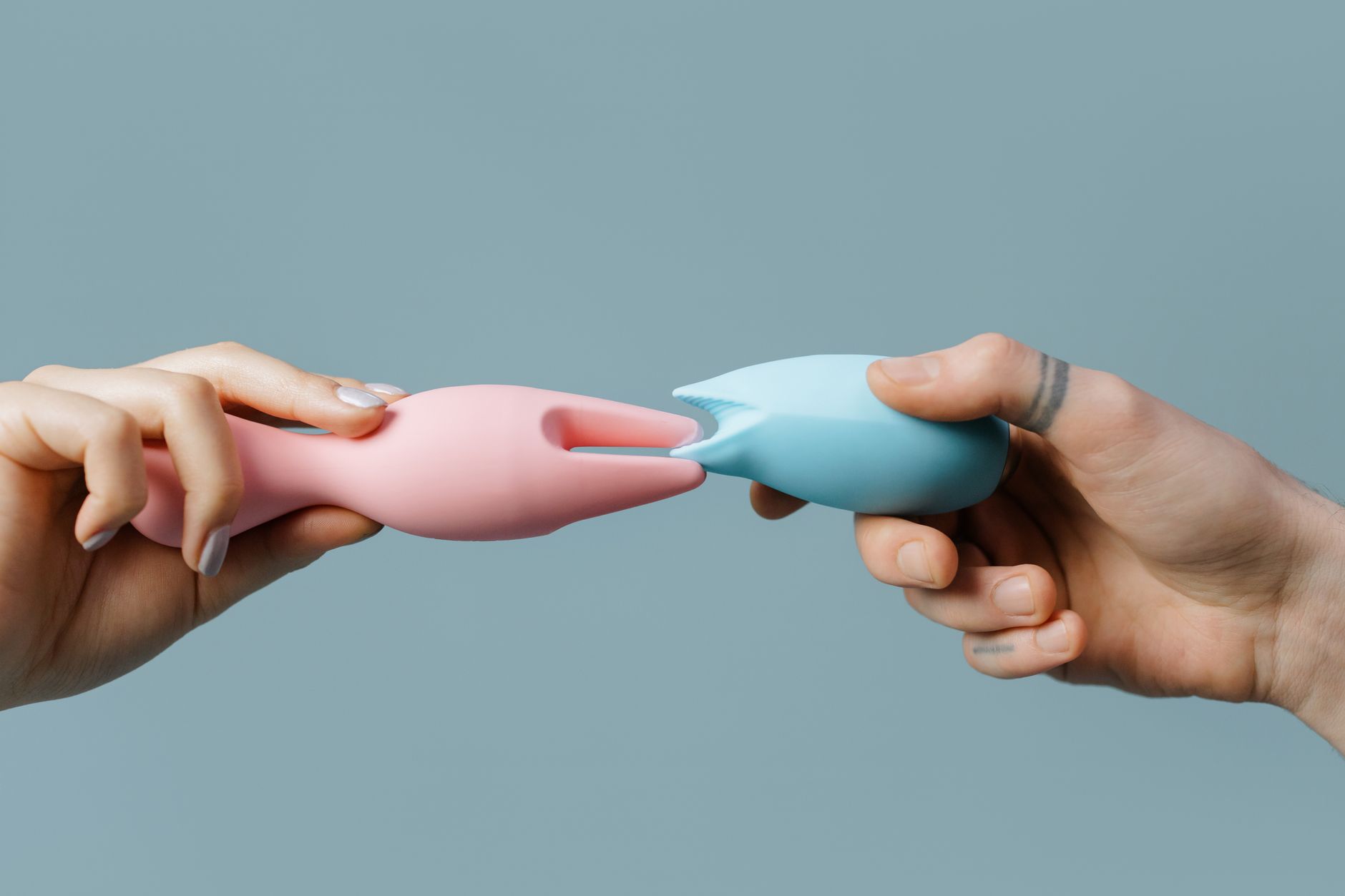
Photo by cottonbro studio on Pexels
The three types of resistance and how to move through each
Type 1: The Protector. Your partner believes that introducing a toy will create distance or make you less interested in them. Solution: invite them to be part of it. "I want you to hold the lemon vibrator. I want you to see what happens to my body. This is something we're exploring together, not something I'm doing to escape you."
Type 2: The Fixer. Your partner thinks if they just try harder, go longer, or get better at technique, the vibrator becomes unnecessary. This comes from love and also from anxiety. Solution: separate the two conversations. "Your touch and this vibrator are not in competition. They do different things. I want both."
Type 3: The Skeptic. Your partner thinks this is unnecessary, weird, or a sign of a deeper problem. Solution: information, not persuasion. "The clitoral nerve has thousands of endings. A lemon clitoral vibrator accesses them in a way human touch can't. This isn't about whether our connection is good. This is about neuroscience."
Most partners fall somewhere in the middle. The move is to listen to which fear is actually underneath and address that, not the stated objection.
What actually changes when you use lemon vibrators together
Many couples find that introducing a lemon vibrator into partnered sex actually deepens connection because the pressure lifts. You're no longer performing. You're no longer waiting for an orgasm that might not come. You're actually present.
This is counterintuitive, but it's real. When your partner understands that you're not waiting for them to "make" you come, and they're not responsible for your pleasure in that narrow way, sex becomes collaborative instead of transactional.
Start small. Use a lemon sucker vibrator during foreplay while your partner watches. Let them see your face, your breathing, your arousal building. This isn't performance. It's information. Your partner learns that you're not leaving the room mentally. You're actually arriving more fully.
Then, when you're both ready, introduce it during penetration if that's what you do. Many partners find this shifts everything because the pressure's off them and the pleasure intensifies for you, which actually turns most partners on more than anything else.
When to use lemon vibrators solo, and why that matters
Here's what I tell couples: solo pleasure is not a betrayal. It's a necessity.
When you understand your own body in isolation, you know what you want, what works, and what doesn't. You can then communicate that to your partner from a place of knowledge, not guessing. This is actually the fastest way to improve partnered sex because you're not both fumbling in the dark.
Some partners worry that solo vibrator use means you're choosing yourself over the relationship. It's the opposite. Knowing yourself is how you show up more fully in partnership. How to Use Lemon Vibrators When Switching From Manual Stimulation has a deeper dive on this if you want more.
Set a boundary: "I'm going to explore on my own, and I'll tell you what I learn. This isn't about secrecy. It's about self-knowledge."
The script for the first time using it together
Before the moment arrives, say: "I'm going to use my lemon vibrator during sex. I'm not trying to rush things. I'm trying to come. You can keep doing what you're doing, or you can do something different. Let's just see."
Then actually let them see. Many partners discover that watching someone use a clitoral vibrator is wildly sexy once they get over the initial insecurity. The visibility of pleasure is magnetic.
If your partner does go quiet or seems uncomfortable, pause the whole thing. "I'm noticing you seem distant. What's happening?" Then listen. Don't defend. Don't explain again. Just listen and adjust.
After sex, talk about it plainly. "That felt amazing." Or: "I liked when you..." or "Can we try...next time?" This normalizes the experience and moves it out of the realm of "big deal" into "this is just what we do."
When your partner won't budge
Sometimes you do everything right and your partner still refuses. They won't look at lemon vibrators, won't hear about clitoral physiology, won't consider that their resistance might be about their own insecurity rather than your body's actual needs.
At that point, you have a choice that has nothing to do with the vibrator. You're choosing whether your partner's comfort with your pleasure matters more than your pleasure itself. That's not a small question, and I'm not going to answer it for you. But it's the real conversation.
You deserve to explore your own body. You deserve pleasure that's not contingent on your partner's emotional stability. And you deserve a partner who gets that.
What good looks like
Eventually, a lemon vibrator becomes ordinary. Your partner stops seeing it as a threat and starts seeing it as a tool, the same way they'd see lube. They might even hand it to you. They might incorporate it without being asked. They might discover that watching you use it turns them on.
Some couples find that lemon sexual toys become part of their regular practice. Others use them occasionally. Some people use them solo and never with a partner. All of those are fine. The goal isn't a specific outcome. The goal is your pleasure and your partner's willingness to be in the room with it.
FAQs
Does using a lemon clitoral vibrator mean my partner isn't satisfying me?
No. Your body isn't a problem to solve. Different stimulation does different things. A lemon vibrator accesses clitoral nerve endings through suction, which is physically different from touch. This isn't about your partner's competence. It's about variation.
Will my partner feel threatened if I want to use a lemon vibrator?
Probably, at first. Most partners experience initial insecurity because they've absorbed the story that pleasure should come only from them. A conversation that separates your pleasure from their adequacy helps here. Some partners move through it quickly. Some take time.
Can I use lemon vibrators if my partner is completely against them?
Yes, you can use them solo. But a partner who won't allow you to explore your own pleasure is showing you something important about how they view your autonomy. That's worth examining, maybe with a therapist.
Should I hide my lemon vibrator if my partner doesn't know?
Not long-term. Secrecy corrodes intimacy. If you're hiding something from your partner, that's usually a sign that the relationship doesn't have enough safety for honest conversations. That's the actual problem, not the vibrator.
What if using a lemon vibrator actually makes my partner jealous or angry?
That's a sign of deeper control dynamics that a vibrator won't fix. A partner who becomes angry when you explore your own body is showing a concerning pattern. If this is happening, talking to a therapist individually might help you sort out whether this is a relationship you want to stay in.
Do I need to ask permission to use a lemon vibrator?
No. Your body is yours. That said, if your partner is going to discover it eventually, a conversation beats discovery. You're not asking permission. You're offering information and inviting them into your world.
The bottom line
Your partner's resistance isn't about lemon vibrators. It's about vulnerability, insecurity, and stories they're telling about what your pleasure means about them. Your job is to stay clear about what's actually true: your body deserves to be known. Your pleasure matters. And your partner's discomfort is data, not a reason to shrink.
If they're willing to move through their discomfort, great. You get to explore together. If they're not, you still get to explore. The vibrator isn't the relationship problem. It's just exposing what was already there.
If you're feeling stuck in this dynamic, reaching out for support can help. Sometimes having a professional in the room changes everything.