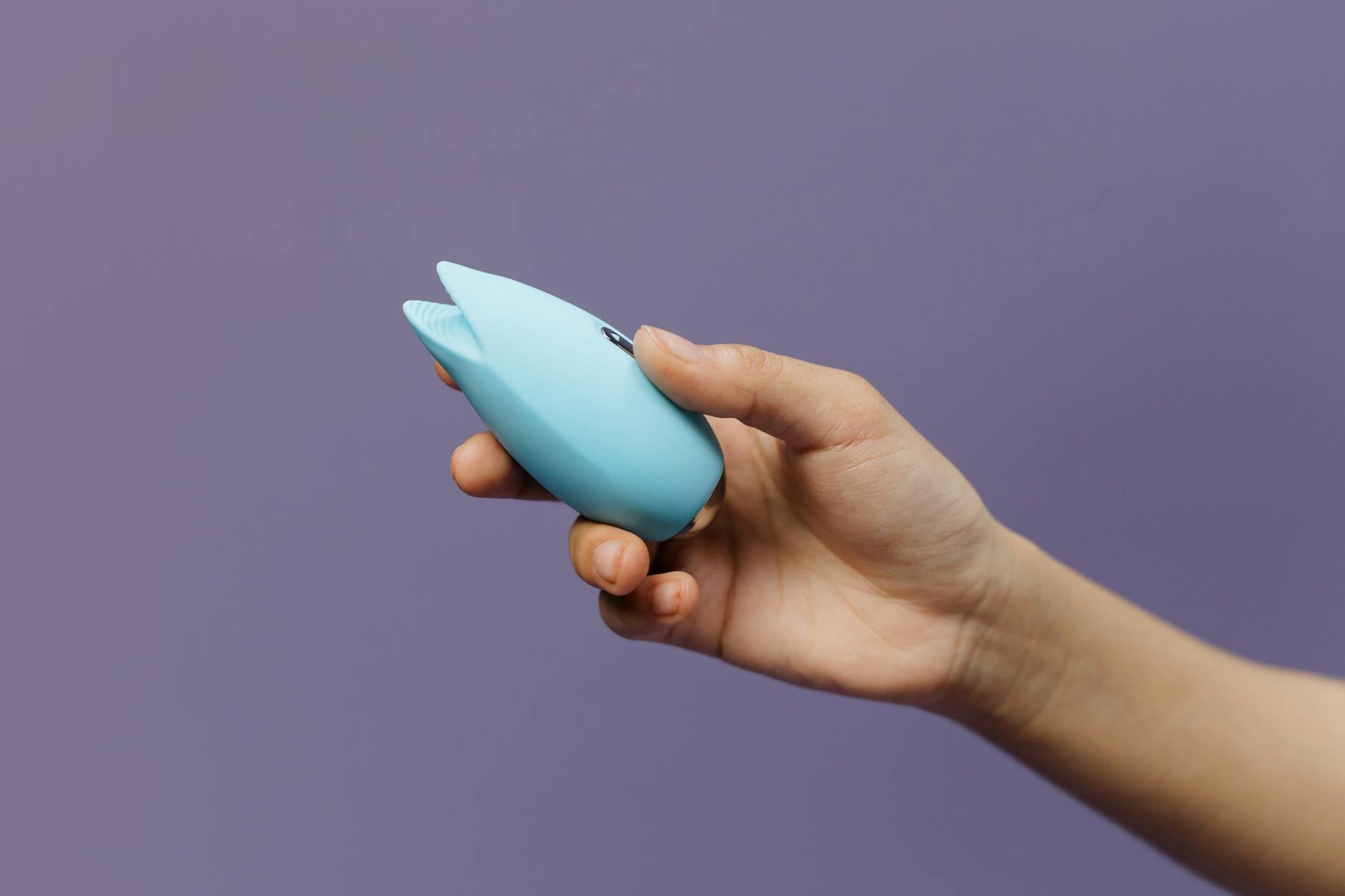
Why Do Lemon Vibrators Feel More Intense on Sensitive Bodies
Let's be real. You bought a lemon vibrator because it looked good, the reviews were glowing, and you wanted to see what the hype was about. Then you switched it on and immediately thought: "Everyone else experiencing this differently or am I just wired weird?"
You're not weird. Your body is just more responsive, and that's entirely biological. Here's why some people feel clitoral vibrators as gentle waves while others feel them as electric jolts.
Nerve density varies wildly between bodies
The clitoris isn't one sensation center. It's a network of 8,000-plus nerve endings clustered in an area smaller than a pea, and the distribution of those nerves isn't even. Some people have denser clustering in the glans (the visible tip), others have more sensation spread across the vulva, and still others have peak sensitivity tucked under the hood where direct contact feels like too much.
When you use a lemon sexual toy on a body with dense nerve clustering, every vibration pattern registers as amplified. It's not the toy. It's your neurology.
My clients with high sensitivity often describe it like this: "It's not that the vibration is too strong. It's that it's TOO MUCH all at once." That distinction matters because it changes how you adjust.
Tissue thickness and arousal state matter more than you think
The tissue covering your clitoris isn't uniform. Some people have thinner skin, which means vibrations transmit more directly to nerve endings. Others have more fatty tissue in the mons pubis, which acts as a cushion and diffuses sensation.
Arousal state amplifies this. When you're highly aroused, blood flow to the clitoris increases, tissue swells, and nerve sensitivity goes up. If you're using a lemon vibrator when you're not fully warmed up, the intensity can feel shocking. This is especially true for people already working with higher baseline sensitivity.
The best practice: spend 5-10 minutes on external stimulation and mental arousal before introducing the vibrator. Let your body catch up.
Hypersensitivity vs. normal sensitivity - there's a real difference
I want to separate two things that often get confused. Normal sensitivity is when a vibrator feels strong. Hypersensitivity is when it feels painful, numbing, or overwhelming even at lower settings.
If the Lem vibrator or any lemon clitoral vibrator feels good but intense, you're probably on the sensitive end of normal. You likely need:
- Lower pattern settings (start at 1-2, not 3-5)
- The toy held farther from direct contact (over the hood instead of the glans)
- Shorter sessions initially
- Water-based lubricant to reduce friction
If it feels actively painful, tingling in a numb way, or triggers a shutdown response, you might have vulvodynia or another condition worth discussing with a gynecologist. Those are different problems with different solutions.
The hood is your friend if you're sensitive
Here's a tactical shift that works for 70% of my hypersensitive clients: keep the clitoral hood ON.
Instead of pulling back and making direct contact with the glans, position the toy so the vibration transmits through the hood. It's like putting a thin barrier between the nerve cluster and the vibration pattern. The sensation is still there, still pleasurable, but filtered. You retain all the good without the overwhelming feeling.
With lemon vibrators specifically, the suction action combined with this position often feels more targeted and less chaotic than traditional vibration patterns.
Pattern selection is not about preference - it's about your nervous system
Let's say you switched on your lemon vibrator and went straight to pattern 5. It felt intense. So you assumed patterns must just feel intense on you, and you'd learn to live with it. Actually, the pattern itself matters.
Steady patterns (constant vibration at one speed) often feel more manageable than complex rhythms because your nervous system can anticipate the stimulation. Alternating patterns, pulsing, or waves can feel more chaotic when your baseline sensitivity is already high.
Start with the simplest, slowest pattern. If that feels manageable, try a different speed of the same basic pattern before moving to complex rhythms. Most people with sensitive bodies find 2-3 patterns they actually love instead of trying to adapt to all of them.
Desensitization is temporary and not what you want
Some people respond to intense sensation by using it more, thinking they'll acclimate. This sometimes works (the nervous system does adapt to repetitive stimulation). Usually it backfires.
Repeatedly exposing sensitive tissue to high-intensity stimulation can lead to overstimulation, which feels like numbness or pain afterward. It's not numbness because the sensation is adapting. It's numbness because you've fatigued the nerve endings.
If you're sensitive, more isn't the goal. Better sensation is. That means finding the intensity sweet spot where pleasure registers clearly without overwhelm.
Positioning and angle change everything
You might think using a lemon vibrator is straightforward: hold it, find what feels good, done. For sensitive bodies, angle and positioning are the real dial.
Direct vertical contact (toy pressing straight into the glans) = maximum intensity. Angled approach (toy coming from below or the side) = sensation spreads across a broader area and feels less concentrated. Moving it slightly in figure-8 patterns = distributed stimulation instead of sustained intensity.
This is why "I felt nothing" and "I felt everything" can both be true depending on how you're holding the toy. Explore positioning as much as you explore patterns.
When to talk to a partner about sensitivity
If you're using lemon sexual toys solo, you control intensity completely. With a partner, it gets trickier because someone else is holding the toy.
Most sensitive folks don't say "I'm sensitive" and instead just move away or tense up. Partners often read this as rejection instead of neurology. The honest conversation changes everything.
Try: "I'm sensitive to direct pressure, so I need it angled slightly" or "I want the lower patterns first, always" or "Can you hold it steadier? The movement is making it feel chaotic."
If you're learning how to use a lemon vibrator with a partner, sensitivity communication is part of that conversation. Partners who know it's not about them relax, and everything improves from there.
Lube reduces perceived intensity without reducing pleasure
This seems counterintuitive but it's true. Adding water-based lubricant between your body and a lemon clitoral vibrator slightly diffuses the sensation by creating a thin buffer layer. It doesn't make the vibration weaker. It makes it feel smoother.
Many sensitive people report that the same pattern feels gentler with lube than without it. It's also essential if you're using the toy for longer sessions, as it prevents irritation from friction.
The recovery curve for sensitive bodies
After intense or extended stimulation, sensitive bodies often need recovery time. This isn't failure. It's biology.
You might notice that 15 minutes with a lemon vibrator leaves your clitoris feeling tender or numb for a while. If you try again too soon, the sensation is muted. This is temporary nerve fatigue.
Plan shorter sessions with longer rest between them. It's genuinely more effective than forcing extended stimulation. You'll often find that the sensation comes back sharper and clearer if you pace it.
When sensitivity might signal something else
If your sensitivity is new, changed suddenly, or accompanied by pain that doesn't ease with positioning adjustments, that's worth mentioning to a gynecologist. Conditions like vulvodynia, hormonal fluctuations, or skin irritation can change how sensation feels.
You don't need a medical reason to use a lemon vibrator less intensely. But if you want to understand why you're sensitive, a professional can help clarify. Sometimes what looks like nervous system hypersensitivity is actually inflammation or another treatable thing.
The good news about sensitive bodies
Here's what my sensitive clients often discover: the intensity they initially saw as a limitation becomes their advantage. Because they feel everything, they often find pleasure peaks that less sensitive bodies have to search harder for. They also become excellent at communicating what they want because they have to.
Your sensitivity isn't a problem to fix. It's information to work with.
Frequently Asked Questions
Why does my lemon vibrator feel more intense on some days than others?
Hormone fluctuations, arousal level, stress, and pelvic floor tension all affect sensation moment to moment. Estrogen peaks around ovulation, and in those days, most people feel vibrations more intensely. Stress and tension also increase perceived intensity because your nervous system is already activated. This is completely normal and not a sign anything is wrong.
Can I desensitize my clitoris if I use my lem vibrator too much?
Temporarily, yes. If you use high-intensity patterns for extended periods daily, nerve fatigue happens. But this reverses with rest. Taking 2-3 days off between sessions usually restores full sensation. The goal isn't to desensitize yourself. The goal is to find the frequency and intensity that gives you pleasure without that numb, fatigued feeling afterward.
Is it normal to feel pain instead of pleasure with a lemon clitoral vibrator?
Pain isn't normal pleasure. If you feel sharp, shooting, or burning pain with vibrator use, stop and give your body time. Pain can signal inflammation, irritation, or that you're applying pressure to an area that needs a different approach. If pain persists, check with a gynecologist. This isn't about your vibrator being wrong. It's about getting the right diagnosis.
Should I use numbing cream or desensitizing spray with my lemon vibrator?
No. These products are designed for other purposes and will mask sensation rather than help you find your real pleasure response. You're looking for the right intensity, not no sensation. If standard intensities feel unmanageable, adjusting angle, pattern, and positioning works better than trying to chemically reduce sensation.
Does using a lemon vibrator during pregnancy make sensitivity worse?
During pregnancy, hormonal changes (especially elevated estrogen) actually increase blood flow to the clitoris and heighten sensation. So sensitivity might temporarily increase. After pregnancy and especially after weaning, hormone shifts can bring it back to baseline or change it again. This is temporary and normal as hormones re-stabilize.
Can I build up to higher intensities gradually if I'm sensitive?
Yes, but not by forcing yourself through discomfort. Instead, try: use a lower pattern you can comfortably sustain for 5 minutes. Once that feels easy, try the same pattern for 7-8 minutes. Then move to the next pattern level. Your nervous system adapts gradually this way, and you're not triggering fatigue or overwhelm.
Final thought
Sensitivity isn't weakness or a defect in your nervous system. It's how you're wired. The people who figure out they're sensitive early and adjust accordingly actually get to pleasure faster than those who keep cranking intensity and wondering why it doesn't feel good.
Start low, go slow, pay attention to angle and positioning, and let your body tell you what actually works. That's not a compromise. That's mastery.
If you have more questions about how to work with your body instead of against it, reach out.
References: Nerve density distribution in the external genitalia (Halata & Munger, 1986), Vulvovaginal physiology during arousal and sexual response (Masters & Johnson), Hormonal influences on genital sensation (Kingsberg & Rezaee, 2013).