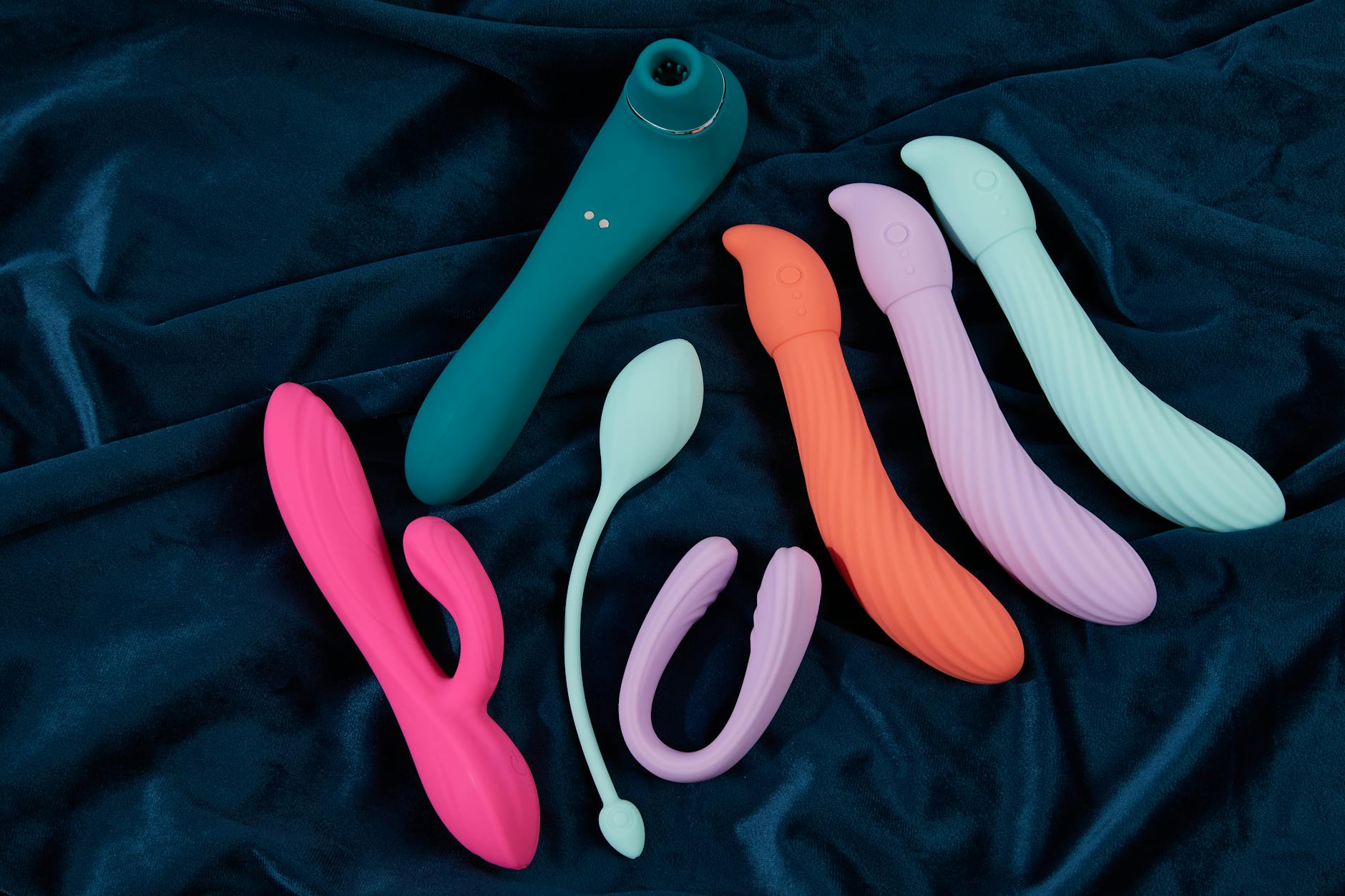
Let's be real: most vibrator guides treat patterns and intensity like a simple dial. Low, medium, high. Done. But anyone who's actually used a lemon clitoral vibrator knows it's way more interesting than that. Your clitoris is made of thousands of nerve endings, and different patterns trigger different ones. Find the right combination for your body, and you unlock something that buttons alone can never do.
Why lemon vibrators have multiple patterns in the first place
A single constant buzz works, sure. But your nervous system gets habituated. After a few minutes at steady intensity, the sensation flattens. Your brain adapts and stops registering the stimulus as intensely. This is why rhythm and variation matter. A pattern that pulses, builds, or switches tempos keeps your nervous system engaged. It's not fancy for fancy's sake. It's neurology.
Lemon vibrators and other clitoral vibrators use patterns for exactly this reason. A constant buzz at pattern 1 feels gentle. Switch to pattern 3, which might pulse in a broken rhythm, and suddenly you're hitting different nerve pathways. Your body has to pay attention again. That's the point.
The secondary reason is practical: patterns let you match your mood and your body's readiness. Some days you want a slow ramp. Some days you want to get straight to it. Intensity settings give you that range without requiring a whole drawer of different toys.
Reading your lemon vibrator's pattern options
Most lemon sexual toys (including the Hello Nancy Lem) offer between 8 and 12 patterns. The lowest numbers are usually your steady, unvarying patterns. Pattern 1 is often a constant gentle buzz. Pattern 2 might also be constant but slightly shifted in frequency. Once you hit pattern 3 or 4, most vibrators introduce rhythm. Pulses. Waves. Escalations.
Here's what these common rhythms actually do:
Steady pulse patterns. These are exactly what they sound like. On, off, on, off at a regular tempo. Good for exploration because you're not distracted by variation. You can feel the baseline of the vibrator without pattern noise.
Escalating patterns. These build from slow to faster or soft to intense. Useful when you want your body to warm up naturally. Many people find escalation patterns bridge the gap between needing time and also wanting eventual intensity.
Broken or irregular rhythms. Think of a pattern that goes fast, then slow, then medium, then double-fast. These keep your nervous system alert. They prevent habituation and often feel playful. Not everyone loves them, but people who do, really do.
Wave patterns. A gradient climb and fall, like a sine wave. These feel particularly good for extended sessions because they give your sensation receptors breathing room between peaks.
The best way to learn your vibrator is to cycle through patterns slowly, starting at the lowest intensity. Spend 30 seconds on each one. Notice which ones make you think "nope" and which ones make you think "interesting." That's your baseline data.
Intensity levels and how your body actually responds
Intensity is separate from pattern. A pattern at level 1 is completely different from the same pattern at level 10. Most people assume "more intense" means "better," and that's where the guessing game starts.
Here's the thing about clitoral vibrators and intensity: you need different levels for different purposes and different moments in your cycle.
Early exploration or lower arousal: Levels 1-3 are your friend. This is where you feel the individual nuances of each pattern without your nervous system going haywire. If you jump to level 7 when you're not fully aroused, the vibrator will feel uncomfortably sharp or flat. Your tissue is more sensitive to pressure when blood flow is lower.
Mid-session, building arousal: Levels 4-6 is the sweet spot for most people most of the time. Intense enough to feel purposeful, not so intense that sensation becomes one-dimensional. This is where a lot of people actually orgasm, not at the maximum setting.
High arousal or deliberate intensity: Levels 7-10. Use these when you're already fairly turned on and want the vibrator to tip you over. Some people use high intensity for the last minute or two. Some use it throughout. It depends on your nervous system and what you're in the mood for that day.
Here's what people usually get wrong: they assume they need to start high and stay there. Then the sensation levels off, they get frustrated, and they assume the vibrator isn't good. What actually happened is they habituated to the intensity. Your clitoris adapts quickly to constant stimulation at the same level.
Building your personal pattern and intensity menu
This is the practical part. Most people don't have a plan going in. They just press buttons. But thinking about it like a menu makes sessions more satisfying and actually shorter (counterintuitively, because you're not hunting for the right sensation mid-session).
Start by picking a pattern that appeals to you. Not the most intense, not the gentlest. Something in the middle of the range that sounds interesting when you read the description or just feels right. Set intensity to level 3 or 4.
Use that combination for a few sessions. Get to know it. Notice if your arousal rises in a way that feels good. Notice if you habituate (sensation gets boring or numb-feeling). If you habituate, either switch patterns or bump intensity by one level.
Over a week or two, you'll have a clear picture of what works. Most people settle on 2-3 "go-to" combinations. One for slow, exploratory sessions. One for when you know what you want and want to get there. One wildcard that's fun but different.
This is not overthinking. This is literacy with your own body. And it makes the actual experience radically better.
Common mistakes with lemon vibrators and why people make them
Mistake one: jumping straight to high intensity because they think gentle won't work. Your clitoris has 8,000 nerve endings. It doesn't need maximum power to feel good. Often it needs sensitivity.
Mistake two: staying on the same pattern for 15 minutes waiting for the sensation to intensify. It won't. Your nervous system will habituate. Switch patterns or bump intensity. Movement helps too (that's not the vibrator failing, that's just how bodies work).
Mistake three: assuming all lemon sexual toys feel the same. They don't. Lemon vibrators use suction and pulsation. Other clitoral vibrators might use rumbly stimulation or different rhythm profiles. What works for a friend might not be your thing. That's fine and normal.
Mistake four: not factoring in your cycle. If you menstruate, hormone shifts change sensation throughout the month. Right before your period, you might want gentler stimulation. Midcycle, you might want more intensity. There's no shame in needing to adjust the dial.
When to switch patterns mid-session
You don't have to stick with one pattern for the entire time. In fact, most people's best sessions involve at least one switch. Here's a rough template some people follow:
Start with an escalating pattern at level 2-3. Let your arousal build for a few minutes. Once you feel yourself warming up (body temperature rising, sensation feeling more defined), switch to a steady pulse pattern at level 5-6. This is often where the magic happens. Finally, if you want to push toward orgasm, spike the intensity to 7-8 or switch to a broken rhythm pattern that keeps your attention sharp.
You might not need all three phases. You might just want one pattern the whole time. The point is giving yourself permission to experiment.
The role of lube, rest, and patience
One variable people forget: whether you have lubrication and how that changes sensation. Lube (especially water-based, since you're likely using silicone toys) dampens vibration slightly. Everything feels softer and warmer. No lube means vibrations cut through more sharply. Neither is wrong. But they're genuinely different sensations, and knowing that prevents you from chasing "wrong" intensity settings when the real variable is moisture.
Also: your clitoris gets tired. If you've been using a vibrator for 20 minutes and sensation suddenly goes numb, that's not the vibrator dying. That's your nerve endings fatiguing. Take a break. Massage the area with your fingers. Come back in five minutes. This is completely normal.
Finding your setup with Hello Nancy's clitoral vibrators
If you're using a Hello Nancy lemon clitoral vibrator (like the Lem), the same principles apply. Start low. Cycle through patterns methodically. Notice what your nervous system actually wants, not what you think it should want. Some people swear by the wave patterns. Some want the broken rhythms. There's no universal "best." Just what works for your body on any given day.
The best part of having multiple intensity levels and patterns is that one vibrator can meet you where you are. Stressed and wanting something gentle? Low intensity, steady pattern. Clear-headed and ready to play? High intensity, broken rhythm. The vibrator adapts to you, not the other way around.
FAQ: Lemon vibrators, patterns, and what actually works
Should I always start at the lowest intensity? Yes, initially. Even if you think you want high intensity, starting low lets you feel the baseline of each pattern. You can always turn it up. You can't un-feel something you've already maxed out.
Why does the same pattern feel different on different days? Your body changes throughout your cycle (if you menstruate), throughout the day (arousal and energy fluctuate), and based on stress and sleep. Your nervous system's sensitivity isn't constant. That's not a bug. It's information.
How often should I switch patterns? There's no rule. Some people love switching every 30 seconds. Some people find it distracting. Experiment and notice what keeps you engaged without overthinking.
Is it normal to prefer gentle intensity over intense? Completely normal. Contrary to porn logic, many people's most intense orgasms come from moderate intensity because it allows sustained focus. High intensity sometimes becomes numbing instead of pleasurable.
Can vibration intensity change the kind of orgasm I have? Yes, somewhat. Very intense stimulation often produces sharp, quick orgasms. Moderate intensity over longer periods often produces deeper, longer-building ones. Neither is better. Different neural activation patterns.
What if I find I need higher and higher intensity over time? That's likely habituation and it's normal. Switch patterns frequently, take breaks, use lube, or rotate toys so your nervous system stays engaged. Your clitoris doesn't need to be "retrained." It just needs novelty.
The real skill with lemon vibrators isn't learning the patterns. It's learning to trust what your body actually wants instead of what you think you should want. Start low, stay curious, and pay attention. Everything else follows.
If you're new to clitoral vibrators and unsure where to start, our <a href="/blog/guide">buying guide</a> walks through the basics. And if you're already familiar with the landscape and just want to understand timing and longevity better, check out our post on <a href="/blog/how-long-does-lemon-vibrator-take-to-charge">how long lemon vibrators take to charge</a>—battery life is part of the equation too.
The goal isn't to become an expert. It's to have better sessions. That starts with showing up curious instead of certain.