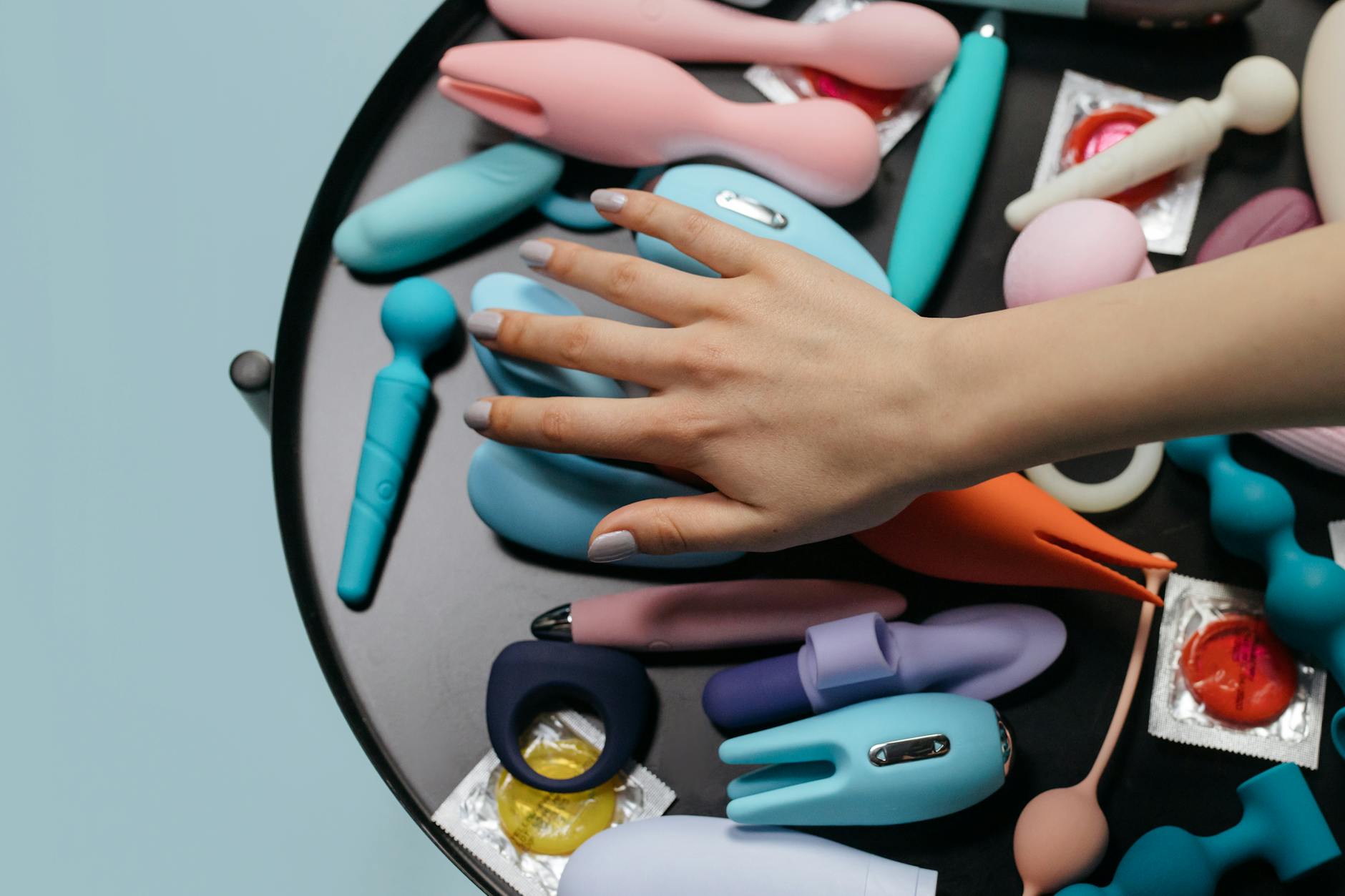
Your birth control is literally rewiring your pleasure response
Let's be real: nobody tells you that switching birth control can change how your body responds to touch. You switch for a reason. Your old pill made you moody, or the IUD felt heavy, or your doctor recommended a different hormone profile. You feel like you're making a smart health choice. Then suddenly, a Lemon vibrator that used to work feels different. Either it takes longer to build sensation, or the intensity feels muted, or your arousal pattern shifts entirely. You wonder if something's broken. It's not. Your hormones just rewired the whole circuit.
Birth control is a hormone delivery system. It changes the baseline levels of estrogen and progesterone in your blood, and those hormones directly influence blood flow to the clitoris, nerve sensitivity in your vulva, and how quickly your brain and body sync into arousal. When you switch from one method to another, or from hormonal to non-hormonal, you're essentially flipping a biochemical switch. Your body responds, but it takes time to adjust.
The frustrating part? Most of that adjustment happens silently. You're not expecting it. You're using a Lemon clitoral vibrator exactly the way you always have, and suddenly it feels foreign.
How different birth control methods affect clitoral sensation
Not all hormonal birth control is the same, and that matters for how you experience pleasure.
Combined hormonal methods (the pill, patch, ring) contain both estrogen and progestin. They suppress ovulation and thin the uterine lining. The estrogen in particular supports vaginal blood flow and tissue thickness, which contributes to arousal speed and sensation intensity. If you're switching between different pills or from a pill to a ring, the hormone ratios are different. Higher estrogen can feel more sensitive. Lower estrogen can muffle sensation.
Progestin-only methods (the mini-pill, the implant, the hormonal IUD) deliver only progestin. There's no estrogen to support blood flow the same way. Many people report that desire dips slightly or that sensation feels less sharp. This doesn't mean your clitoris doesn't work. It means the pathway to arousal is a different speed.
Non-hormonal methods (the copper IUD, condoms, fertility awareness) don't introduce synthetic hormones at all. Your natural cycle stays intact. Some people find that sensation feels more variable, swinging with ovulation. Others find that their baseline arousal is higher because it's not being suppressed.
If you're switching from a combined pill to a progestin-only method, expect your sensation to feel duller initially. If you're going from any hormonal method to non-hormonal, expect your desire to feel more cyclical and less steady. None of these changes are permanent or wrong. They're just different.
Why clitoral sensitivity specifically takes a hit
The clitoris is exquisitely sensitive to hormone shifts because it's packed with blood vessels and nerve endings that respond directly to estrogen and testosterone. When your birth control changes, so does the amount of blood that reaches those tissues at rest and during arousal.
Think of it like this: baseline blood flow is the difference between a dimmer switch at 30% and one at 70%. When you're using a lemon vibrator, your body is cranking that dimmer higher. But if the baseline dropped because of your new birth control, you're starting from a lower number. It takes longer to get to full brightness.
There's also a nerve sensitivity component. Hormones influence how your nerves process touch. Estrogen makes nerve endings more responsive. Progestin can dull that responsiveness slightly. When you switch methods, it's not that the nerves are damaged. It's that they're operating under a different chemical environment.
Why this matters for your lemon vibrator: suction-based devices like Lemon clitoral vibrators rely on consistent blood flow and nerve sensitivity. If your baseline drops, you might need more time during warm-up, or you might need to start at a slightly higher intensity level than you used to. The device still works. Your body is just speaking a different language now.
The arousal timeline shifts too
One of the sneakiest changes is how long it takes to actually get aroused once you start using a lemon sucker.
On combined hormonal birth control, many people can move fairly quickly from zero to orgasm. The hormone profile supports that speed. On progestin-only methods or non-hormonal methods, the same sequence might take 50% longer. This isn't laziness or lack of desire. It's biochemistry. Your body is building arousal at a different pace because the hormonal backdrop has changed.
This is important because if you don't know the timeline has shifted, you might assume the vibrator isn't working or that something's wrong with you. You might turn up the intensity out of frustration, which can actually create irritation rather than pleasure. The smarter move is to budget more time and adjust your expectations for the first month or two.
How long does this take to stabilize? For most people, 4 to 8 weeks. Your body adapts. The new hormone level becomes your baseline. But you have to give it that runway.
What actually helps during the transition
If you've just switched birth control and your lemon vibrator feels different, here's what I recommend.
First, extend your warm-up. You're not broken. You need more time. Add 10 to 15 minutes of foreplay, fantasizing, or just existing in your body before you turn on the device. This tells your parasympathetic nervous system to get ready. Blood flows. Arousal builds.
Second, use lubrication regardless. Some birth control methods, especially progestin-only ones, can make lubrication slightly more sparse. It's not a medical problem. It's just biology. A little water-based lubricant makes the whole experience feel smoother and reduces the pressure on your body to do all the work.
Third, start at a lower intensity than you think you need. If you used pattern 4 or 5 on your lemon clitoral vibrator before, start at 2 or 3 now. Let your sensitivity catch up. You can always increase. You can't un-irritate tissue that's been overstimulated.
Fourth, track what you notice. Does sensation feel sharper on certain days of your cycle? Does arousal take noticeably longer? Do orgasms feel different in quality (stronger, weaker, different location)? This information is gold. It tells your body what it needs and helps you plan your pleasure.
If four weeks have passed and nothing feels better, and you're using strategies like longer warm-up and appropriate lube, it might be worth checking in with your doctor. Birth control shouldn't obliterate sensation. If it has, a different formulation might suit you better.
When sensation changes signal something else
Here's the distinction that matters: hormonal birth control changing your sensation is normal and temporary. Complete numbness or pain is not.
If you switched methods and suddenly can't feel much of anything even with extended warm-up and good technique, that can signal hormonal imbalance or thyroid issues unrelated to birth control itself. Same if pleasure turns into discomfort or sharp sensations. Those warrant a conversation with your doctor.
Also worth knowing: if you switched to an IUD, especially a hormonal one, and you're experiencing persistent numbness or reduced sensation, make sure the device is positioned correctly. Sometimes a malpositioned IUD can cause referred nerve issues. That's fixable.
The other piece: if you're on antidepressants or anti-anxiety medications alongside your birth control, the combination can dampen sensation more than birth control alone. If that's you, check out how lemon vibrators work differently when you're managing anxiety. The strategies overlap.
The timeline for getting back to baseline
Most people find that their usual pleasure response returns within 4 to 8 weeks of starting new birth control. Your nervous system adapts. Blood flow patterns stabilize. By week 12, nearly everyone is back to their new normal.
But here's the real thing: your new normal might not be your old normal, and that's okay. If you switched from a high-estrogen pill to a low-dose pill or progestin-only method, your sensation baseline might stay slightly softer than it was. That's not better or worse. It's different. You adjust your technique, your warm-up, your expectations. You find what works for your current body.
The Lemon sucker or whichever lemon sexual toy you use? It still works. You're just learning to speak its language under new hormonal conditions.
Common questions about birth control and clitoral sensation
Does switching birth control permanently damage sensation?
No. Birth control changes the environment around your nerves and blood vessels, not the nerves themselves. Your clitoris adapts when you switch, and if you ever go back to your old method, sensation shifts again. It's temporary and reversible.
Why does sensation feel duller on progestin-only birth control?
Progestin doesn't support blood flow to genital tissues the way estrogen does. Your clitoris gets less baseline blood supply, which means arousal is slower and sensation is softer. This usually stabilizes within a few weeks.
Can I speed up the adaptation period?
Partially. Good nutrition, regular movement, stress management, and intentional warm-up time all help your nervous system adapt faster. But you can't rush the basic biochemistry. Four to eight weeks is realistic.
Should I switch birth control methods to improve sensation?
Only if you're unhappy with your current method for other reasons too. Switching birth control solely to enhance sensation isn't usually the answer because the effect is temporary and the reasons you're on your current method probably matter. Talk to your doctor.
Does the copper IUD affect sensation differently than hormonal methods?
Yes. With a copper IUD, your natural cycle returns, which means sensation actually swings throughout your month. Around ovulation, you might feel sharper. In the luteal phase, duller. Some people love this variability. Others find it frustrating. Neither is wrong.
How do I know if reduced sensation is from birth control or from something else?
Birth control changes build gradually over days and weeks. Other issues like depression, medication side effects, or relationship stress usually feel more sudden or are accompanied by other symptoms. If sensation tanked overnight, that's worth checking with a doctor.
What to do right now
If you just switched birth control and your lemon vibrator feels off, you're not broken and the device isn't broken. You're in the adjustment window. Budget extra warm-up time. Use lubrication. Start at lower intensity. Give it four weeks before you assume anything is permanently different. Most likely, your body will adapt and things will click back into place.
If you're past four weeks and things still feel flat, or if you have concerns about what's normal, reach out to your doctor or get in touch with us at Lemon Vibrator Shop. We can help you figure out if it's an adjustment issue or if a different approach might work better for your current body.
Your pleasure matters. It's worth understanding how it works under your current hormonal conditions.