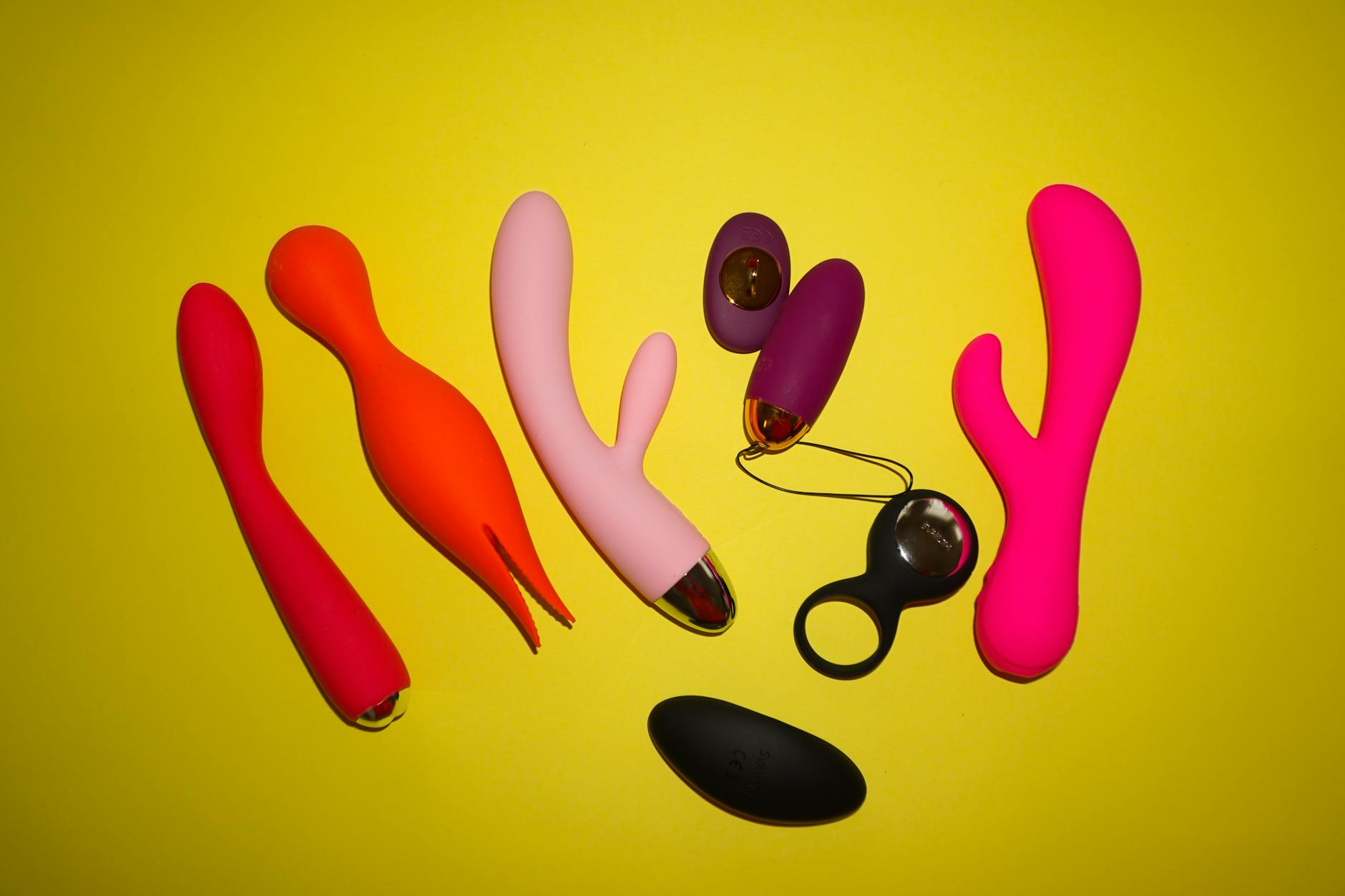
Let's start with the obvious disappointment
Your lemon vibrator used to work faster. Now it takes forever. Same toy, same settings, different result. And honestly, that's disorienting because you're wondering if something's wrong with you, when actually something's just shifted.
Hormonal changes don't break your ability to orgasm. They reprogram the timer. Understanding why matters more than you'd think, because once you know what's happening inside your body, you can stop fighting the clock and start working with it instead.
How hormones control arousal speed
Okay, so here's the thing about pleasure. Your brain doesn't experience it in a vacuum. Hormones like estrogen, progesterone, and testosterone are basically the operating system for how fast signals travel, how quickly blood flows to the right places, and how sensitive nerve endings become. They're not mood. They're infrastructure.
When these hormones shift (whether from birth control changes, cycle timing, perimenopause, or pregnancy), the wiring changes. Estrogen specifically controls blood vessel flexibility and tissue thickness around the clitoris. More estrogen, faster blood flow, quicker arousal. Less estrogen, slower ramp-up. Testosterone drops too, and that affects desire intensity. Your brain still wants it. Your body just needs more runway.
This is why someone on a high-dose birth control pill might find that her usual ten-minute warm-up with a lemon clitoral vibrator now takes twenty. Or why the week after ovulation feels like you're moving through honey compared to the week before.
The real timeline after hormonal shifts
Let me be specific about what changes and what doesn't. After significant hormonal events (starting or stopping hormonal contraception, pregnancy, postpartum, perimenopause), your arousal curve flattens. Picture it like this: instead of a steep line going up, it's a gentler slope. Same endpoint, longer journey.
The clitoris doesn't lose sensitivity. The neural pathways don't go anywhere. What changes is engorgement speed. The clitoris fills with blood more slowly when estrogen is lower or when progesterone is higher. That means a lemon vibrator's suction pattern needs more time to trigger the cascade of responses that lead to orgasm.
Some people report a five-minute difference. Others find it's fifteen or twenty minutes longer than before. There's no universal number because every body processes hormonal changes differently. But the lag is real, it's measurable, and it's not your fault.
Why pattern changes don't always help
The instinct is to reach for a stronger setting on your lemon clitoral vibrator or switch patterns. Sometimes that works. Often it doesn't, because you're trying to fix infrastructure with intensity.
If the problem is that blood isn't reaching the clitoris fast enough, cranking up the suction won't speed that up. It might feel good. But it won't actually close the gap between before and after. What you need instead is patience and rhythm consistency, not power escalation.
Lower, steady pressure applied over a longer window actually works better during hormonal transitions. It allows the engorgement process to happen gradually. Stop, start, shift patterns and you interrupt that process. Consistency over intensity is the real hack here.
Warming up your body first changes everything
Here's something most people skip and absolutely shouldn't. Before you even touch a vibrator, spend time warming up your body. I mean physical warmth. Heat literally increases blood flow and tissue responsiveness.
A hot shower, time under warm covers, even just moving your body for five or ten minutes makes a measurable difference in how fast your lemon vibrator works. When your core body temperature rises, vasodilation (blood vessel opening) happens faster. Your clitoris gets blood faster. The timeline compresses.
People who add this step during hormonal transitions report that their warm-up time drops significantly. Not to pre-shift levels necessarily, but close enough that the waiting feels manageable. And psychological impatience is a real barrier to pleasure, so reducing the felt wait time matters as much as the actual timeline.
Mental arousal becomes the bottleneck
Here's the part that gets overlooked. When your hormones shift, your body's baseline arousal lowers. That means your brain has to work harder to bridge the gap between non-aroused and aroused. Physical stimulation alone can't do it as fast as before.
So the real slowdown isn't entirely physiological. It's partly neurological. Your lemon clitoral vibrator is working the same way. Your body is responding the same way. But your mind is taking longer to engage because the chemical scaffolding that usually speeds that up is thinner.
This is why fantasies, audio, visual stimulus, or a partner's involvement suddenly matters more than it used to. You're not becoming more complicated. You're adapting to a new arousal equation where mental engagement counts for a bigger piece of the orgasm puzzle.
The role of lubrication in timing
Lubricant feels like a side detail, but it's actually central to how fast a lemon vibrator can work. When hormonal changes reduce natural lubrication, friction increases. More friction means your body has to work harder to maintain comfort. That effort competes for your attention with pleasure.
Using a good water-based lubricant doesn't just make things feel better. It removes a source of friction-related distraction and lets your nervous system focus on sensation instead of managing discomfort. Your warm-up with the vibrator gets more efficient because you're not subconsciously bracing against pressure.
Some people find that adding lube cuts their warm-up time by five to ten minutes. Not because the lube has magical properties, but because your body can relax into the experience instead of protecting itself.
Cycle timing matters more now
If you still menstruate, you've probably noticed that certain times of your cycle feel wildly different. After hormonal shifts, those differences often get more pronounced. Estrogen peaks right before ovulation. Progesterone rises after. Your lemon clitoral vibrator might work noticeably faster on high-estrogen days and slower on high-progesterone days.
Tracking this isn't about optimization obsession. It's about managing your own expectations. If you know that the three days before ovulation are your fast-response window, you can plan accordingly. And knowing a slower response is temporary instead of permanent completely changes how you experience it.
For people on hormonal birth control, the shifts are usually smaller because the hormones are synthetic and dose-stable. But they're still there, just compressed into a narrower range.
When to suspect something else is happening
There's a difference between "my lemon vibrator takes longer now because my hormones changed" and "suddenly I have no desire at all and orgasm feels impossible." If the timeline lengthened but pleasure is still there, that's adaptation. If pleasure disappeared, that's worth exploring more carefully.
Depression, anxiety, certain medications, relationship shifts, and sleep deprivation can all tank sexual response in ways that feel like hormonal changes but aren't. And they can layer on top of actual hormonal shifts, making everything feel more broken than it really is.
Read about how lemon vibrator suction works differently with anxiety if this resonates. Sometimes the slowdown is about your nervous system state, not your hormones.
Reframing "takes longer" as information
The speed of response isn't a measure of your body's worth or your sexuality. It's data. Your lemon vibrator is just a tool. What matters is whether you're getting where you want to go.
People often fixate on speed because we've internalized this idea that faster is better, hotter, more legitimate. Nonsense. A twenty-minute journey with a lemon clitoral vibrator that ends in pleasure is not inferior to a five-minute one. It's different. If anything, slower arousal often means more sustained intensity once you get there.
The goal isn't to get back to your old timeline. It's to figure out what works now and stop judging yourself for the change.
Practical adjustments that actually work
Four things you can try right now, today.
First, add fifteen minutes to your warm-up window. Don't assume you know how long you need anymore. The new normal might be different. Give yourself permission to start and take the time.
Second, consistency over switching. Pick one pattern on your lemon vibrator and stay with it. Let your body settle into the rhythm instead of chasing novelty.
Third, physical warmth before stimulation. Shower, move, layer under blankets. Raise your core temperature first.
Fourth, lube that works for you. Water-based, silicone, hybrid. Pick one and use it. Full stop. Don't skimp or assume you don't need it now. Lubrication is infrastructure, not failure.
These aren't workarounds. They're how bodies actually work after hormonal changes. You're not fixing something broken. You're adjusting to new biology.
FAQ
Why does my lemon clitoral vibrator feel less intense after starting hormonal birth control?
Hormonal birth control, especially high-dose formulations, can lower testosterone levels and reduce overall genital sensation. The progestin in the pill also increases blood viscosity slightly, which can slow engorgement. This doesn't mean the lemon vibrator is less effective. Your body is just responding to a different hormonal environment. Give it three to four months to fully stabilize, then reassess. If intensity remains low, chat with your prescriber about dose or formula adjustments.
How long does it take to adjust to a new arousal timeline after hormonal changes?
Most people experience the biggest adjustment window in the first six to eight weeks after a hormonal event like starting a new birth control, postpartum, or entering perimenopause. After eight weeks, your body starts to establish a new baseline. Full adaptation usually takes three to four months. Your lemon clitoral vibrator might not feel exactly the same as before, but the new rhythm becomes your normal.
Can I use a stronger lemon vibrator if my current one takes too long?
Unsure. Power level isn't the limiting factor when arousal is slow due to hormonal changes. You're not running into a strength ceiling. You're navigating a longer timeline. Jumping to a more intense lemon clitoral vibrator might feel different, but it likely won't dramatically shorten your warm-up time. Better to master your current toy with the adjustments above before upgrading.
Does the lemon clitoral vibrator work differently based on where I am in my cycle?
Absolutely. The days right before ovulation, when estrogen peaks, usually feel fastest and most intense. The luteal phase after ovulation, when progesterone dominates, typically feels slower and might require more warm-up. This variation is normal and actually useful information. Track it for a cycle or two and you'll see your own pattern.
Is slower arousal after hormonal changes permanent?
Not necessarily. If the change came from starting a medication or hormonal birth control, your body often adjusts after a few months. If it's perimenopause or postpartum, the timeline is longer but usually not permanent. Some shifts stick around. Others ease with time. The key is not catastrophizing during the adjustment window. Your lemon vibrator still works. The tempo just changed.
What if my partner thinks slower arousal means I'm less attracted to them?
That's a conversation to have early and clearly. Slower arousal has nothing to do with desire or attraction. It's physiology. Share this information with them. A partner who understands the science usually relaxes. And honestly, longer warm-up often means more foreplay, more connection, more intimacy. Reframe it as an opportunity, not a problem.
The timeline is information, not a verdict
Your lemon clitoral vibrator doesn't work slower because your body is broken. It works on a different timeline because your hormones have shifted the infrastructure. That's not degradation. That's adaptation.
Most of the frustration people feel isn't about the actual wait time. It's about the expectation mismatch. Once you accept the new baseline and stop fighting it, the experience usually feels better, not worse. Slower doesn't mean worse. It just means different.
If the timeline feels genuinely stuck or if desire has completely disappeared, reach out and let's talk about what might actually be happening. But if it's just a timing shift? That's your body doing exactly what it's supposed to do. Work with it. Your lemon vibrator will thank you.