Here's the real part
Your lemon vibrator isn't broken. Your body just speaks a different language now. Hormonal shifts—whether from perimenopause, menopause, hormonal birth control, or other life changes—alter how quickly you build arousal, how sensitive your tissues feel, and what intensity level actually works. The good news is that this is 100% fixable with a few tweaks to your technique.
I've worked with hundreds of clients navigating this exact transition. Almost all of them think something is wrong with them. Almost none of it is about the vibrator.
How hormones affect sensitivity and response
When estrogen drops, your vulvar tissue gets thinner and less elastic. This sounds scary. It isn't. What it means practically is that direct, high-intensity stimulation feels sharper rather than delicious. The clitoral nerves themselves don't go anywhere—they're just working with less protective cushioning.
Testosterone shifts matter too, even though people don't talk about it much. Testosterone fuels desire and also affects how quickly you move from "not interested" to "ready." When it drops, arousal takes longer to build. This isn't dysfunction. It's a timing issue.
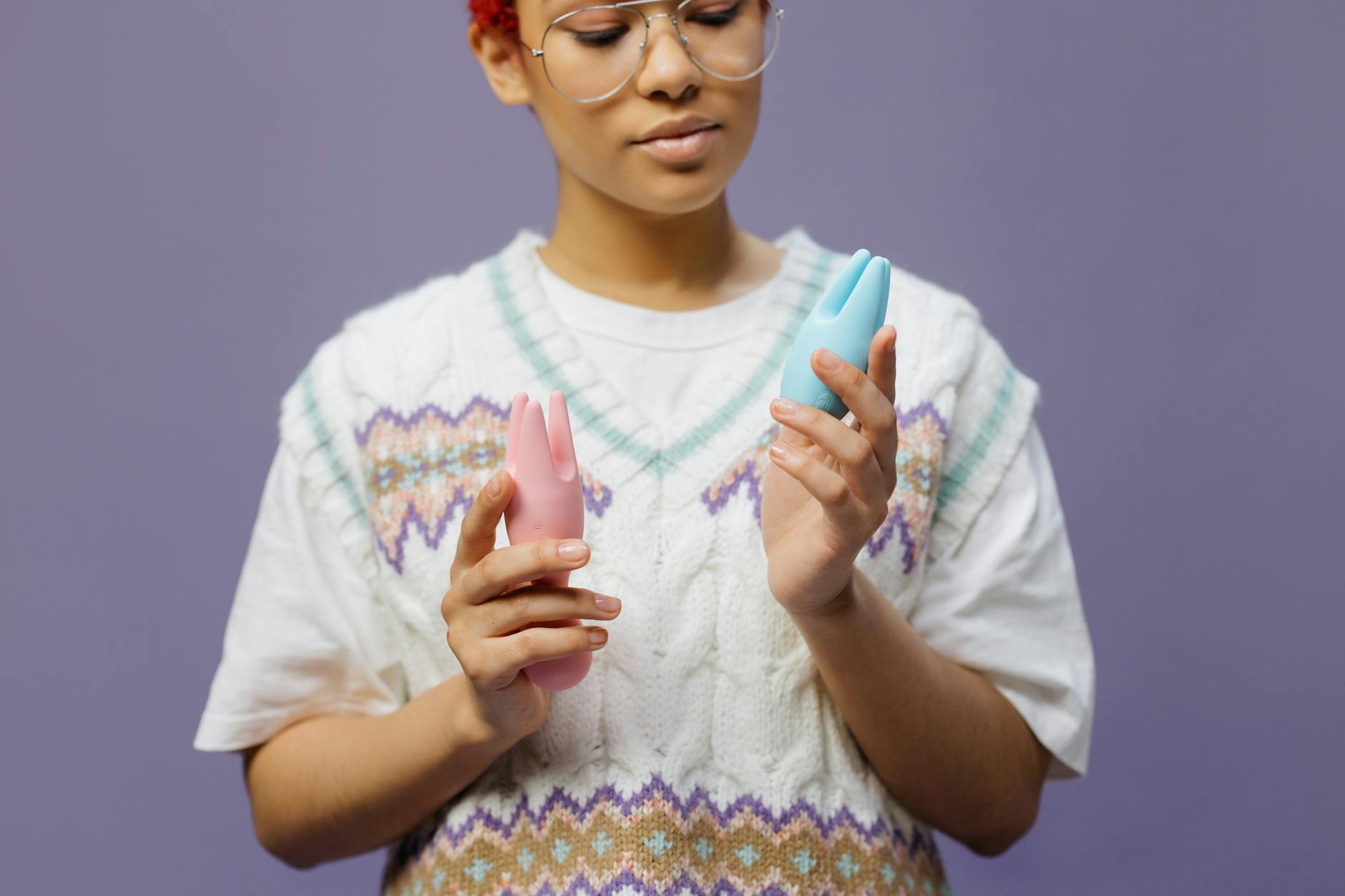
The beauty of a tool like the Lemon clitoral vibrator is that the suction mechanism doesn't rely on direct pressure the way traditional vibrators do. But even with a smart device, your approach needs to change.
Starting lower than you think you need to
If you've been using your lemon vibrator on patterns 5-8, start this phase of your life on patterns 1-3. Yes, really. This isn't forever—it's just recalibration.
Why? Because thinner tissue is more responsive. You don't need as much stimulus to create sensation. Using a lower intensity first means you can actually feel what's happening instead of just chasing intensity. Many people discover that patterns 2-4 deliver more satisfying orgasms than they ever got from maxing out the device.
Start at the lowest setting. Spend 10 minutes there. Let your body acclimate. Your nervous system needs time to wake up, and rushing this phase teaches your body to chase intensity instead of presence.
Extending your warm-up window
Arousals used to build in 5 minutes? Budget 15 now. Maybe 20.
This isn't a flaw in the system. It's actually an opening. A longer warm-up means deeper arousal. It means your vulva gets more engorged, which paradoxically makes thinner tissue feel fuller and more responsive. It means your mind settles into the experience instead of rushing to the finish line.
Spend the first 8-10 minutes without your lemon vibrator. Touch your whole body. Get your breath moving. Build anticipation with your hands, a partner's hands, or just stillness. When you introduce the vibrator, you're not starting from zero. You're amplifying something that's already happening.
Adjusting your positioning and angle
After hormonal changes, the angle of approach matters more than it used to.
If direct clitoral contact feels too intense, angle your lemon vibrator slightly so the suction seal pulls on the tissue surrounding your clitoris rather than directly on the glans. This creates sensation without the sharp edge that can feel uncomfortable on thinner tissue.
Try the following: Instead of holding the vibrator perpendicular to your body, angle it at 15-20 degrees. This shifts pressure to the side of your clitoral structure. Many people find this more comfortable and actually more intense in the good way.
Experiment with this over 2-3 sessions before deciding what works. Your body is still learning its own language. Don't expect one night to be your answer.
Timing your sessions with your cycle or rhythm
Even after period stops, your body has rhythms. Some days your vulva will feel more responsive. Some days it won't.
If you still menstruate, days 1-3 of your cycle are often less responsive. Days 8-14 are frequently more sensitive. Post-menopause, there's no exact pattern, but you'll likely notice your own rhythm within a month of paying attention.
Track when sessions feel easiest and most pleasurable. Then, when you're scheduling time for yourself, pick those windows. This isn't about forcing arousal on bad days. It's about stacking the deck in your favor.
Pairing your lemon vibrator with lubrication
Water-based lubricant changes everything after hormonal shifts. Not because you're broken, but because thinner tissue responds better when there's a slick surface.
Apply lube generously—more than you probably think you need. It reduces friction, makes the suction seal more comfortable, and lets the vibrator glide instead of drag. The sensation shifts from intensity to smoothness. Many clients find this is actually more pleasurable than the pre-hormonal-change experience.
Reapply every 8-10 minutes if you're having a longer session. Lubrication isn't a one-time fix. It's part of the experience now.
What to do if patterns still feel uncomfortable
If you've tried lower intensities, extended warm-up, angle adjustments, and lubrication and something still feels sharp or uncomfortable, it's worth talking to a gynecologist about genitourinary syndrome of menopause (GSM). This is incredibly common and highly treatable with topical estrogen creams that have minimal systemic absorption.
You might also explore whether sensation itself is the issue or whether there's tension in your pelvic floor. After hormonal changes, the pelvic floor can tighten in compensation for lost estrogen support. Progressive relaxation work—literally practicing the opposite of Kegels—can transform the experience in 3-4 weeks.
Exploring new patterns and rhythms
Here's something that surprises most people: after hormonal shifts, different patterns often feel better than they did before.
Patterns you used to skip might now be your favorite. A rolling pulse pattern might feel more satisfying than a straight rumble. A slow ramp-up might hit different than a constant intensity. Spend time exploring the full range of your lemon vibrator's patterns, even ones you dismissed before.
Your nervous system has changed. Your preferences have changed. This is the opportunity to rediscover what actually feels good instead of what you thought was supposed to feel good.
When to bring a partner into the adjustment
If you're partnered, communication during this transition is everything. Your longer arousal window, your need for different positioning, your lubrication requirements—these aren't things to hide or apologize for. They're invitations.
A good partner actually gets excited about this. Longer foreplay means more connection. Different positioning means novelty. Lubrication means less friction and more sensation for everyone. Frame it as "here's what I'm discovering feels amazing now" instead of "my body doesn't work anymore."
If your partner pushes back on the time commitment or seems to resent the adjustments, that's a different conversation worth having outside the bedroom.
FAQ
How long does it take to adjust to using a lemon vibrator after hormonal changes?
Most people see significant improvement within 2-3 weeks of consistent experimentation. Your nervous system needs time to recalibrate to new stimulus. After a month of regular sessions with adjusted technique, you typically know what your new baseline is. But the learning curve extends to about 8-10 weeks. That's when muscle memory develops around the new approach.
Can I still use my lemon vibrator on high intensity after hormonal shifts?
Absolutely. You might not need it as often, but as you settle into the adjustment phase, many people gradually work back up to higher intensities. The difference is that you're doing it from a foundation of deeper arousal and body awareness, not as a substitute for warm-up. Some people max out at pattern 5 now. Others eventually get back to pattern 8. There's no "right" intensity.
Does hormonal therapy change how my lemon vibrator feels?
Yes. If you start HRT, topical estrogen, or testosterone therapy, your body will shift again—usually back toward pre-change responsiveness. You might find you need less warm-up time or that higher intensities feel better again. These shifts happen gradually over 4-8 weeks of hormone therapy. Adjust your technique as you notice changes, not all at once.
Is it normal for orgasms to feel different after hormonal changes?
Completely normal. After hormonal shifts, orgasms often feel more diffuse and less peaked. Some people describe them as deeper or more full-body instead of concentrated in one area. Some people find they take longer but feel more intense. The quality changes. This isn't worse. It's just different. Many clients tell me these orgasms are the most satisfying of their lives.
What if I'm using a lemon vibrator but my partner prefers traditional intercourse?
This is a common compatibility question, not a vibrator question. You can absolutely use your lemon vibrator with a partner in multiple ways. As a warm-up before intercourse. As an addition during intercourse. As the main event while your partner provides other stimulation. See our guide on how to use a lemon vibrator during intercourse with a partner for specific techniques. The real work here is conversation about timing and what you both actually want.
My lemon vibrator worked great before, but now it hurts. What's wrong?
Three things to check: angle, intensity, and tissue health. Start by lowering intensity and adjusting angle as described above. If that doesn't help within a few sessions, book a gynecology appointment. Pain can signal tissue changes that respond well to topical estrogen, pelvic floor tension that physical therapy fixes, or occasionally an allergic response to the toy material itself. Don't push through pain. Address it.
Your pleasure matters now more than ever
Hormonal changes are real. The impact on pleasure is real. But the idea that your best orgasms are behind you is absolutely not real. I've spent enough time in clinical work to know that the people who figure out how to adjust their approach during this transition often end up with richer sexual experiences than they had in their twenties.
Your lemon vibrator is still an excellent tool. Your nervous system just needs a different playbook. Start lower, go slower, angle differently, use lubrication generously. Your body will tell you the rest. If you're struggling with the adjustment or you'd like personalized guidance for your specific situation, reach out to our team at /contact. You don't have to figure this out alone.