
Let's talk about the elephant in the room
Clitoral hypersensitivity is real, uncomfortable, and weirdly taboo to discuss. You get aroused, touch yourself, and suddenly it feels like your nerve endings are screaming. Or maybe the sensitivity came on gradually after a medication change, a breakup, or just because your nervous system decided to recalibrate. Either way, the experience sucks. And if you've ever used a lemon vibrator or any clitoral vibrator before, hypersensitivity can make you feel like you've lost access to something that used to work.
Here's the truth: you haven't lost it. Your nervous system just needs a recalibration plan.
Why clitoral hypersensitivity happens
The clitoris has roughly 8,000 nerve endings concentrated in a space the size of a pea. That's not a flaw of design. It's why pleasure is possible. But that same density means it's also exquisitely sensitive to changes in your body, hormones, anxiety, and nervous system state.
Hypersensitivity usually shows up in one of three ways. First, there's the immediate kind: arousal happens, and direct touch suddenly feels sharp or raw instead of pleasurable. Second, there's the delayed kind: after 30 seconds of stimulation, sensitivity spikes and anything more feels painful. Third, there's the baseline kind: your clitoris is tender to even gentle pressure, with or without arousal.
These aren't the same problem, and they don't have the same solution. Medications like SSRIs, changes in birth control, stress, pelvic floor tension, or even just increased anxiety about sex can trigger any of them.
The lemon vibrator advantage when sensation is too intense
A lemon vibrator or any air-suction clitoral toy works differently than a traditional vibrator. Instead of direct oscillation against sensitive tissue, suction creates a gentle seal and uses air-pulse stimulation. This matters hugely when you're hypersensitive because it distributes pressure across a larger surface area instead of concentrating all the sensation in one pinpoint.
Think of it this way: a traditional vibrator is like tapping your clitoris repeatedly. A lemon sucker is like cupping your hand over the area and gently drawing air in and out. The lemon vibrator gives your nervous system less intense input to process, which means you can sometimes enjoy stimulation when direct vibration would feel unbearable.
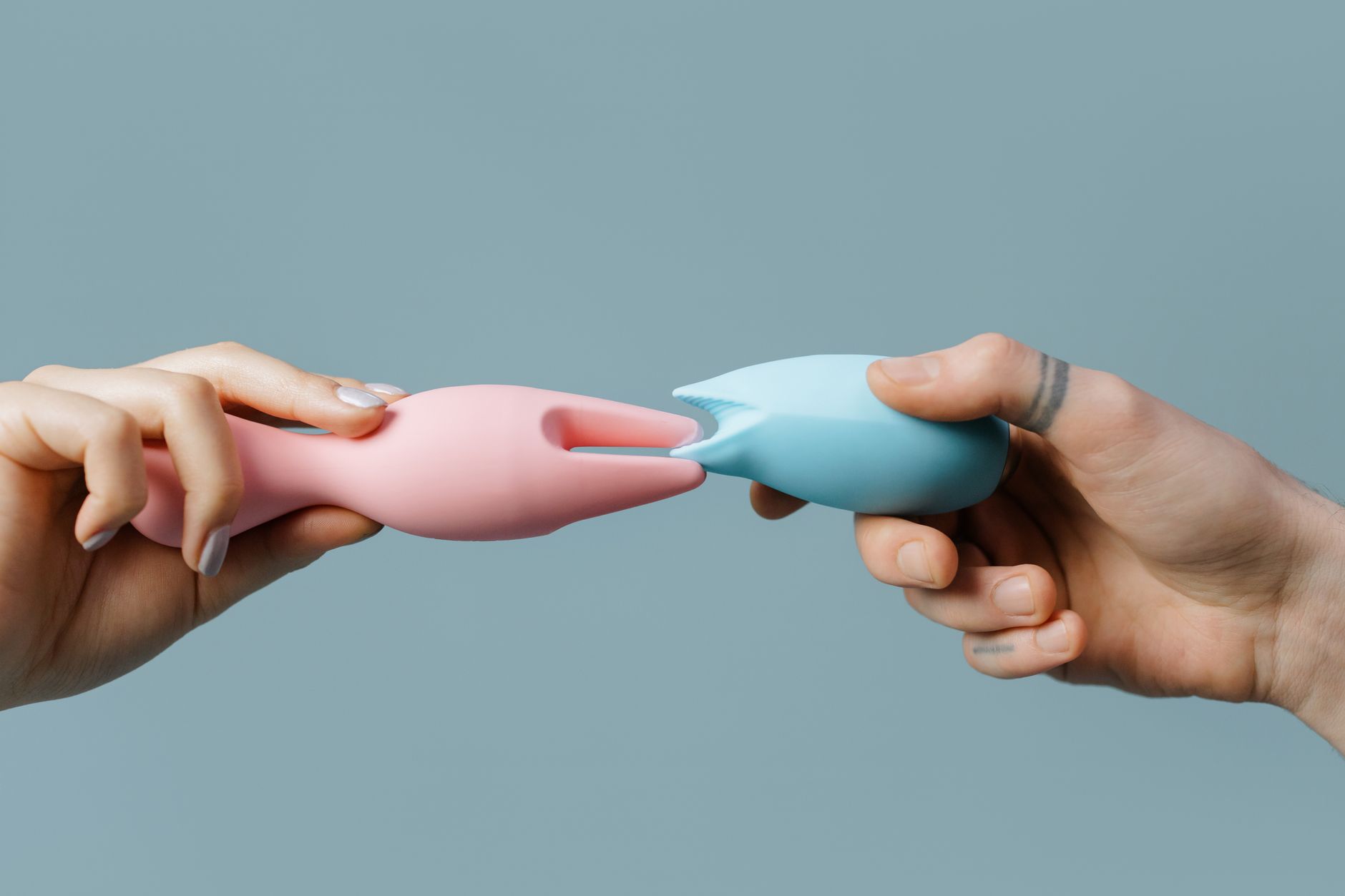
Photo by cottonbro studio on Pexels
Four ways to use a lemon vibrator safely when you're hypersensitive
Start on the lowest setting and stay there for multiple sessions. The temptation is to jump to intensity level 3 or 4 because you're used to stronger stimulation. Don't. Level 1 on most lemon vibrators is genuinely subtle. Use it for two to four sessions before moving up. Let your nervous system get used to the sensation without pushing it.
Use a barrier between your skin and the toy. This sounds counterintuitive, but it works. Try placing the lemon vibrator against your clitoris through underwear, or use a thin piece of fabric like a silk scarf or soft cotton cloth between the toy and your skin. This mutes the sensation just enough to make it pleasurable instead of painful. As sensitivity decreases, you can remove the barrier.
Never apply direct pressure to the opening. Position the lemon vibrator's opening just off to the side of your clitoris, or angled slightly upward toward your pubic bone. This gives you suction and stimulation without the risk of direct pressure on the most sensitive spot. Many people find this positioning more comfortable when hypersensitive, even if they eventually go back to direct contact.
Take breaks every 30 to 60 seconds. Hypersensitivity often builds with continued stimulation. Instead of trying to push through, use the lemon vibrator for 30 seconds, stop completely, breathe, and wait 30 to 60 seconds. Then start again. This pattern prevents the sharp escalation that makes sensation unbearable. Over time, you can extend the duration, but start here.
The nervous system piece (it's bigger than you think)
Clitoral hypersensitivity usually has a physical component, but it's almost always also a nervous system component. If you're anxious about the sensation becoming painful, you tense up, and tension amplifies the hypersensitivity. This creates a feedback loop.
Breaking the loop means managing both sides. Physically, you're adjusting how you use the lemon vibrator. Mentally, you're building new evidence that stimulation can feel good again. This takes time. You might start using a lemon clitoral vibrator on the lowest setting with a barrier and take breaks, and it still feels uncomfortable. That's not failure. That's you gathering data that your body needs more time.
Deep breathing during stimulation helps. Before you turn on the lemon vibrator, breathe in for four counts, out for four counts, and do a few rounds. This activates your parasympathetic nervous system. Then start with the toy at the lowest setting. If sensation starts to spike, pause and breathe again instead of pushing through.
When to layer in a partner or when to pause entirely
If you're navigating hypersensitivity with a partner, this is actually a great time to rebuild intimacy differently. Instead of jumping straight to genital touch with a lemon vibrator, spend time on full-body touch, kissing, and nonsexual physical connection first. This warms up your nervous system and can reduce defensive tension around genital touch.
If your partner wants to use the lemon vibrator on you, they need to understand the same rules. Lowest setting first. Breaks every 30 to 60 seconds. Positioned to the side rather than directly on the clitoris. Let them know that if sensation starts to feel sharp, you'll give them a signal to pause. This removes the pressure to perform and lets both of you focus on what actually feels good.
Sometimes hypersensitivity is so intense that taking a break from all stimulation for a week or two makes sense. That's not giving up. That's resetting. When you come back, your nervous system often recalibrates and the intensity decreases. This is especially true if hypersensitivity showed up after a medication change or a stressful period.
Questions people actually ask
How long does it take for hypersensitivity to go away?
It depends on the cause. If it's tied to a medication like an SSRI, it might take a few weeks to a few months as your body adjusts or as your doctor finds a better option. If it's stress or anxiety related, you might see improvement in days or weeks once you start managing stress and rebuilding a positive association with pleasure. If it's hormonal, it can take longer. The key is not to rush. Use a lemon vibrator consistently on the lowest setting, take breaks, and be patient with your body.
Can I use a lemon sucker if I've never used a vibrator before?
Yes, absolutely. A lemon vibrator is actually an excellent entry point if you're hypersensitive because the suction mechanism is gentler than traditional vibration. Start on the lowest setting with a barrier, take breaks, and go slow. The learning curve is short and the sensation is typically easier to manage than you'd expect.
Does lube help with clitoral hypersensitivity?
Yes, but not in the way you might think. Water-based lube doesn't reduce sensation. Instead, it prevents friction and creates a smoother glide, which feels less harsh against hypersensitive tissue. Use a small amount around the external area, not inside. This buffer can make the difference between discomfort and pleasure when you're using a lemon vibrator.
What if the lowest setting still feels too intense?
Then a barrier is essential. Underwear or fabric between your skin and the lemon sucker mutes the sensation significantly. Alternatively, try turning on the lemon vibrator, using it on the lowest setting, and stopping after five to ten seconds. Repeat with breaks in between. Your nervous system is essentially learning that stimulation can feel okay, not threatening. This micro-dosing approach works for severe hypersensitivity.
Should I talk to a doctor about clitoral hypersensitivity?
If it came on suddenly, if it's painful rather than just uncomfortable, or if you also have pain with penetration or urine, yes. These could indicate an infection, dermatological issue, or hormonal change that needs professional input. But if it's a general "touch feels too strong" situation tied to stress, medications you're aware of, or life changes, you can start with the retraining approach using a lemon vibrator and see if it improves over a few weeks.
Is hypersensitivity permanent?
No. It's an adaptation your nervous system made in response to something. When the trigger shifts or when you actively retrain your nervous system's response through gradual, positive exposure, hypersensitivity almost always decreases. A lemon vibrator's gentle approach makes this retraining feel manageable instead of overwhelming.
The path back
Hypersensitivity feels like you've lost access to pleasure. But really, you've just hit a bump in the road. Your clitoris still has 8,000 nerve endings. Your brain still knows how to feel good. Your nervous system just needs a moment to recalibrate. Using a lemon vibrator on the lowest setting, with breaks and barriers, gives your body permission to slowly rebuild what felt broken. It takes patience, but it works. If you want more guidance on rebuilding sensation after specific life changes, check out how lemon vibrators help when sensation returns slowly after long-term birth control or learn about using lemon vibrators during perimenopause.
Your pleasure matters. And hypersensitivity is just your body asking for a gentler approach. Give it one.